

Stormwater Planning and Budgeting for Property Managers
Why Stormwater Maintenance Requires Long-Term Planning
For commercial property owners and managers, stormwater maintenance is often viewed as a recurring operational expense. Routine inspections, sediment removal, vegetation management, and repairs are necessary to keep systems functioning properly and maintain compliance with local stormwater regulations.
However, many stormwater systems also require periodic major maintenance projects that can carry significant costs if they are not anticipated and budgeted for in advance.
A proactive long-term stormwater maintenance plan helps property managers:
- Maintain regulatory compliance
- Extend the lifespan of stormwater infrastructure
- Reduce the likelihood of emergency repairs
- Improve budgeting accuracy
- Protect property value
- Minimize operational disruptions
Rather than reacting to failures or compliance issues, commercial property managers can use long-term planning to forecast maintenance needs and spread costs over time.
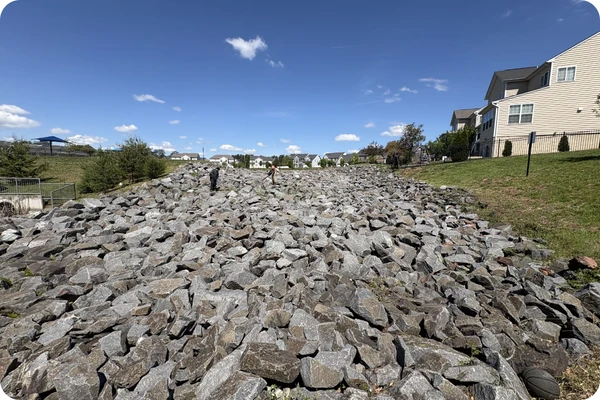
Understanding the Difference Between Routine and Major Maintenance
Routine maintenance typically includes activities performed regularly to preserve system functionality, such as:
- Storm drain cleaning
- Catch basin maintenance
- Vegetation management
- Trash and debris removal
- Minor erosion repairs
- Routine inspections
Major maintenance projects occur less frequently but often require larger investments. Examples include:
- Forebay reconstruction
- Sand filter media replacement
- Bioretention soil replacement
- Underdrain rehabilitation
- Pipe rehabilitation or sliplining
- Retention pond dredging
- Outlet structure repairs
- Major erosion stabilization projects
While routine maintenance may be planned annually, major rehabilitation projects often occur on multi-year cycles and should be incorporated into long-term capital planning.
Why Commercial Properties Often Face Unexpected Stormwater Costs
Many stormwater systems are installed during site development and then receive limited attention until visible problems emerge.
Over time, systems naturally experience:
- Sediment accumulation
- Vegetation overgrowth
- Filter media degradation
- Structural wear
- Erosion damage
- Reduced treatment performance
Without a long-term strategy, property managers may encounter large, unplanned expenditures when systems fail inspections, lose functionality, or require substantial rehabilitation.
In many cases, deferred maintenance increases project costs because minor issues have more time to develop into significant repairs.
Building a Long-Term Stormwater Maintenance Plan
Start with a Complete Stormwater Asset Inventory
The first step is identifying every stormwater management practice on the property.
This may include:
- Retention ponds
- Detention ponds
- Bioretention facilities
- Sand filters
- Filterra systems
- Infiltration practices
- Underground detention systems
- Stormwater pipes
- Catch basins
- Hydrodynamic separators
- Proprietary treatment devices
Maintaining an accurate inventory helps property managers understand what infrastructure exists and where future maintenance obligations may arise.
Document Current Conditions
An inventory alone is not enough. Property managers should also establish baseline conditions for each asset through inspections and condition assessments.
Documentation may include:
- Sediment levels
- Vegetation conditions
- Structural observations
- Erosion concerns
- Previous maintenance records
- Photographs
- Compliance findings
These assessments help identify assets that may require significant maintenance in the coming years.
Establish Maintenance Cycles
Different stormwater practices age differently and require maintenance on different timelines.
For example:
- Catch basins may require cleaning annually or multiple times per year.
- Sand filters may eventually require media replacement.
- Retention ponds may require dredging after years of sediment accumulation.
- Bioretention facilities may need periodic soil or mulch replacement.
Understanding expected maintenance cycles allows managers to anticipate future expenses rather than being surprised by them.
Prioritize Assets Based on Risk
Not all stormwater assets present the same level of risk.
Priority should be given to systems that:
- Have a history of deficiencies
- Play a critical role in compliance
- Show signs of deterioration
- Protect sensitive receiving waters
- Have high replacement costs
Risk-based prioritization helps direct maintenance budgets toward the assets most likely to create operational or compliance challenges.
Budgeting for Major Stormwater Maintenance Projects
Move Beyond Annual Maintenance Budgets
Many commercial properties budget only for recurring annual maintenance services.
While annual budgets are important, they often fail to account for major rehabilitation projects that may occur every 5, 10, or 15 years.
A comprehensive stormwater budget should include:
- Annual maintenance expenses
- Inspection costs
- Compliance-related services
- Anticipated rehabilitation projects
- Emergency repair contingencies
This approach provides a more realistic picture of long-term ownership costs.
Develop Multi-Year Capital Forecasts
Capital forecasting allows property managers to spread anticipated expenses across multiple budget cycles.
Examples may include:
| Project | Estimated Timeline |
|---|---|
| Sand filter media replacement | 5-10 years |
| Retention pond dredging | 10-20 years |
| Pipe rehabilitation | Varies by condition |
| Outlet structure repairs | Condition-based |
| Bioretention media replacement | As needed based on performance |
Actual timelines depend on site conditions, maintenance history, drainage area characteristics, and regulatory requirements.
The goal is not to predict exact dates but to create financial preparedness for future projects.
Use Inspection Data to Refine Budgets
Stormwater systems should not be budgeted solely based on age.
Inspection findings often provide a more accurate picture of future maintenance needs.
Regular condition assessments can identify:
- Accelerating sediment accumulation
- Developing erosion issues
- Structural deterioration
- Reduced treatment performance
- Emerging compliance concerns
This information helps property managers adjust capital forecasts before conditions worsen.
Plan for Emergency Reserves
Even well-maintained systems can experience unexpected failures due to severe weather events, aging infrastructure, or unforeseen site conditions.
Maintaining a stormwater reserve fund can help address:
- Emergency pipe repairs
- Sinkhole investigations
- Major erosion events
- Structural failures
- Compliance-driven corrective actions
Emergency reserves reduce the need for rushed budget reallocations when unexpected issues arise.
The Compliance Benefits of Long-Term Planning
Long-term stormwater planning is not just a financial strategy – it can also support regulatory compliance.
Many jurisdictions require stormwater facilities to remain functional throughout their service life. Deferred maintenance can contribute to:
- Failed inspections
- Notice of violations
- Corrective action requirements
- Increased scrutiny during compliance reviews
By proactively identifying future maintenance needs, property managers can reduce the likelihood of compliance-related surprises.
Partnering with Experienced Stormwater Professionals
Developing a long-term maintenance strategy often requires expertise across inspections, maintenance, rehabilitation, and compliance.
An experienced stormwater contractor can help commercial property managers:
- Assess infrastructure conditions
- Identify future maintenance needs
- Prioritize projects
- Develop maintenance schedules
- Create realistic budget forecasts
- Extend asset lifespan through proactive maintenance
When stormwater infrastructure is treated as a long-term asset rather than a short-term expense, commercial properties are better positioned to manage costs, maintain compliance, and avoid disruptive repairs.
Plan Today to Avoid Costly Repairs Tomorrow
Stormwater systems are significant infrastructure investments that require more than routine maintenance. By creating a long-term maintenance plan and budgeting for future rehabilitation projects, commercial property managers can improve financial predictability, reduce compliance risks, and extend the life of their stormwater assets.
A proactive strategy helps transform stormwater maintenance from a reactive expense into a planned investment in the long-term performance of the property.
📞 Call us at (410) 231-3455 or 💬 Contact us online.


Real Results
iStormwater LLC was an excellent choice. They made the process of the Stormwater pond repairs seamless. They took charge of the project and got the project approved and passing the inspection. We highly recommend them and would use them again.
Incredible stormwater management service. The owner John consulted on a property I manage and ended up saving us thousands of dollars in environmental fees from the government. Now, our property is compliant with the EPA and we have a great partner to keep us maintained on stormwater regulations over time.
So helpful with all of my water issues.
Great communication and leadership and a family friendly atmosphere. Thank you John!
Permeable pavement is designed to let stormwater move through the surface instead of running off as quickly as it would from conventional pavement. But that...
- Annapolis
- Anne Arundel County
- Baltimore County
- Baltimore
- Bel Air South
- Bethesda
- Bowie
- Cecil County
- Charles County
- Columbia
- Gaithersburg
- Glen Burnie
- Howard County
- Montgomery County
- Pasadena
- Prince George’s County
- Rockville
- Severna Park
- St. Mary’s County