

Why Stormwater Systems Stop Draining Properly
Stormwater systems are designed to move water efficiently away from paved surfaces, structures, and landscaped areas. When they stop draining properly, the issue is rarely sudden. More often, it’s the result of gradual buildup, hidden damage, or subtle changes in how water moves across a site.
For property stakeholders responsible for maintaining safe, functional properties, understanding why drainage slows down is key to preventing flooding, maintaining compliance, and avoiding costly repairs.
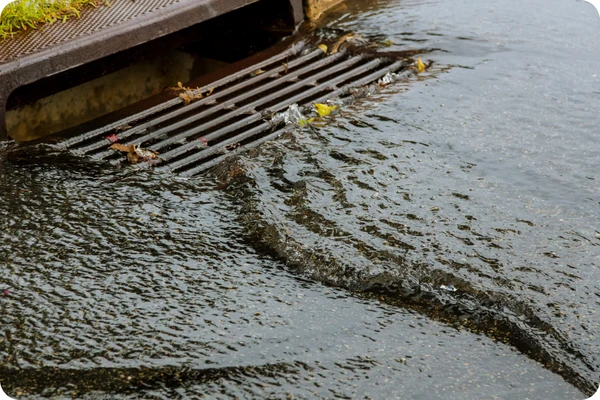
When Slow Drainage Turns Into System Failure
Most drainage problems don’t start with a complete failure. Instead, they show up as small, easy-to-miss warning signs.
You might notice:
- Water lingering longer after routine rain events
- Inlets struggling to keep up during moderate storms
- Sediment or debris collecting around structures
- Minor erosion forming near discharge points
These issues indicate the system is losing capacity. Over time, that reduced performance can lead to backups, redirected flow, and eventually, failure.
The Most Common Reasons Stormwater Systems Stop Draining
1. Sediment Accumulation Reduces Capacity
Over time, sediment carried by runoff settles in key areas of the system, including pipes, structures, and channels.
As sediment builds up:
- Flow capacity is reduced
- Pipes and structures become partially or fully blocked
- Water backs up during even moderate rain events
This is one of the most common – and preventable – causes of poor drainage performance.
2. Clogged or Obstructed Inlets
Storm drains and catch basins are the first line of defense in stormwater systems. When they become clogged with:
- Leaves
- Trash
- Grass clippings
- Sediment
…water cannot enter the system efficiently.
This often results in localized flooding, especially in parking lots and roadways.
3. Pipe Deterioration or Collapse
Underground infrastructure is out of sight – but not immune to damage.
Common issues include:
- Cracked or broken pipes
- Joint separation
- Pipe invert deterioration
- Partial or full collapse
When pipes lose structural integrity, flow is restricted or redirected, preventing proper drainage.
4. Improper Grading or Settlement
Stormwater systems rely on gravity. Even small changes in elevation can disrupt flow.
Over time, you may see:
- Pavement settling
- Soil shifting around structures
- Improper slope development
These changes can create low spots where water collects instead of draining, even if the system itself is functioning.
5. Vegetation Overgrowth and Root Intrusion
Vegetation plays an important role in stormwater management – but unmanaged growth can cause problems.
Issues include:
- Roots infiltrating pipes and joints
- Overgrown vegetation blocking channels and outfalls
- Organic debris accumulating and restricting flow
In some cases, root intrusion can completely block underground pipes.
6. Outlet and Discharge Blockages
Even if water moves through the system correctly, it still needs somewhere to go.
Outfalls and discharge points can become blocked by:
- Woody debris
- Sediment buildup
- Erosion-related collapse
- Vegetation overgrowth
When this happens, water backs up through the system, reducing overall drainage performance.
7. Erosion and Structural Instability
Uncontrolled flow can damage the system itself. Erosion can:
- Undermine pipes and headwalls
- Wash out channel linings
- Displace riprap
- Alter flow paths
As structural elements fail, the system becomes less effective – and more prone to drainage issues.
Why These Issues Shouldn’t Be Ignored
A stormwater system that isn’t draining properly can lead to more than just standing water. It often results in:
- Increased risk of property damage
- Safety hazards for vehicles and pedestrians
- Compliance concerns if systems are not functioning as intended
- Higher long-term repair and maintenance costs
What starts as a minor issue – like partial blockage or sediment buildup – can escalate quickly if left unaddressed.
Restoring Proper Drainage
Correcting drainage issues starts with identifying the root cause. In some cases, restoring performance may be as simple as clearing debris or removing accumulated sediment. In others, more involved repairs may be needed, such as addressing pipe damage, stabilizing eroded areas, or correcting grading issues.
A thorough inspection provides the clarity needed to determine the right approach and avoid treating symptoms instead of the underlying problem.
A Preventative Approach Makes the Difference
Routine inspection and maintenance remain the most effective way to prevent drainage issues from developing in the first place. Taking a proactive approach helps:
- Maintain system capacity over time
- Extend the lifespan of infrastructure
- Reduce the likelihood of emergency repairs
- Keep properties functioning safely and efficiently
Final Thoughts
When stormwater systems stop draining properly, it’s rarely due to a single failure. More often, it’s the result of gradual changes that go unnoticed until the system can no longer perform as designed.
Understanding these underlying causes – and addressing them early – can help prevent small issues from becoming costly problems.
📞 Call us at (410) 231-3455 or 💬 Contact us online.



Real Results
iStormwater LLC was an excellent choice. They made the process of the Stormwater pond repairs seamless. They took charge of the project and got the project approved and passing the inspection. We highly recommend them and would use them again.
Incredible stormwater management service. The owner John consulted on a property I manage and ended up saving us thousands of dollars in environmental fees from the government. Now, our property is compliant with the EPA and we have a great partner to keep us maintained on stormwater regulations over time.
So helpful with all of my water issues.
Great communication and leadership and a family friendly atmosphere. Thank you John!
Stormwater systems are designed to move water efficiently away from paved surfaces, structures, and landscaped areas. When they stop draining properly, the issue is rarely...
- Annapolis
- Anne Arundel County
- Baltimore County
- Baltimore
- Bel Air South
- Bethesda
- Bowie
- Cecil County
- Charles County
- Columbia
- Gaithersburg
- Glen Burnie
- Howard County
- Montgomery County
- Pasadena
- Prince George’s County
- Rockville
- Severna Park
- St. Mary’s County