

When to Use Temporary vs Permanent Stormwater Controls
Stormwater management is not a one-size-fits-all approach. On active construction sites and stabilized properties alike, different controls serve different purposes at different phases of a project.
Understanding the difference between temporary stormwater controls and permanent stormwater controls is essential for staying compliant, protecting downstream waterways, and avoiding costly enforcement actions.
In this guide, we break down how these controls differ, when each is required, and what property owners and contractors need to know to maintain compliance.
What Are Temporary Stormwater Controls?
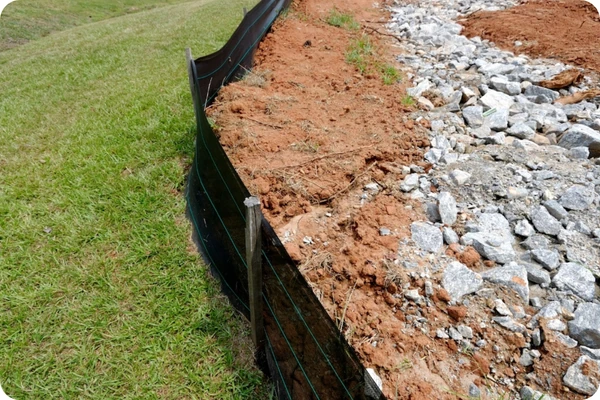
Temporary stormwater controls are short-term measures installed during land disturbance activities such as grading, excavation, or utility installation. Their primary purpose is erosion and sediment control (ESC).
These controls prevent sediment-laden runoff from leaving the construction site and entering storm drains, streams, or neighboring properties.
Common Temporary Controls
Typical examples include:
- Silt fence
- Stabilized construction entrances
- Sediment traps
- Inlet protection
- Compost filter socks
- Temporary diversion berms
When Are Temporary Controls Required?
Temporary controls are required whenever soil is disturbed. In most states, projects disturbing 1 acre or more must obtain coverage under the EPA’s Construction General Permit (CGP) or an authorized state equivalent.
For example:
- Maryland projects require coverage under the Maryland Department of the Environment (MDE) Construction General Permit.
- Delaware projects require coverage through DNREC.
- Northern Virginia projects fall under the Virginia DEQ Construction Stormwater Permit.
- Washington, DC projects are regulated by DOEE.
Temporary controls remain in place until the site achieves final stabilization, typically defined as established vegetation or permanent cover over disturbed areas.
What Are Permanent Stormwater Controls?
Permanent stormwater controls are long-term stormwater management practices installed as part of the site’s final development. Their purpose goes beyond sediment control – they are designed to:
- Manage runoff volume
- Improve water quality
- Reduce peak discharge rates
- Meet post-construction regulatory requirements
These systems are often referred to as Stormwater Management (SWM) Best Management Practices (BMPs).
Common Permanent Controls
Examples include:
- Bioretention facilities (rain gardens)
- Retention ponds
- Detention basins
- Underground vault systems
- Hydrodynamic separators
- Green roofs
- Infiltration trenches
Unlike temporary measures, these systems remain in place for the life of the property and require ongoing inspection and maintenance.
Temporary vs. Permanent Stormwater Controls: Core Differences
| Feature | Temporary Controls | Permanent Controls |
| Purpose | Prevent sediment during construction | Manage runoff long-term |
| Duration | Short-term (construction phase only) | Long-term (life of property) |
| Regulatory Focus | Erosion & Sediment Control (ESC) | Post-Construction Stormwater Management |
| Maintenance | Frequent during active construction | Routine inspections and scheduled maintenance |
| Removal | Removed after stabilization | Remain permanently |
In short:
- Temporary controls protect downstream systems during land disturbance.
- Permanent controls manage runoff and protect water quality after development is complete.
Why the Distinction Matters
Failing to understand the difference between these systems can create compliance gaps.
1. Compliance Risk
Removing temporary controls too early can result in sediment discharge violations.
Neglecting permanent BMP maintenance can trigger inspection failures and enforcement actions.
2. Performance Issues
Temporary controls are not engineered for long-term hydraulic performance.
Permanent systems are not designed to manage heavy sediment loads during construction.
Installing permanent facilities too early in a project can cause premature clogging, structural damage, or costly rehabilitation.
3. Financial Impact
Corrective actions, restoration, and regulatory penalties are often far more expensive than proactive inspection and maintenance.
Transitioning from Temporary to Permanent Controls
One of the most critical phases in stormwater management is the transition point.
Before removing temporary controls:
- Disturbed areas must be stabilized.
- Permanent facilities must be protected from sediment loading.
- Final grading and drainage patterns must be established.
In many jurisdictions, permanent systems require post-construction cleanout before final approval or acceptance.
Maintenance Requirements: Ongoing Responsibilities
Even after construction ends, stormwater obligations do not.
Permanent stormwater systems typically require:
- Annual or semi-annual inspections
- Sediment removal
- Vegetation management
- Structural repairs
- Documentation for regulatory reporting
In Maryland, Virginia, DC, and Delaware, many properties are subject to long-term maintenance agreements or recorded covenants requiring ongoing compliance.
The Bottom Line
Temporary and permanent stormwater controls serve distinct, equally important functions.
- Temporary controls protect waterways during active construction.
- Permanent controls manage runoff and water quality for the life of the property.
Understanding the difference – and properly maintaining both – is critical to regulatory compliance, environmental protection, and long-term asset performance.
For commercial property managers, developers, HOAs, and government contractors, proactive stormwater management is not optional – it is a regulatory requirement that protects both your property and downstream waterways.
📞 Call us at (410) 231-3455 or 💬 Contact us online.


Real Results
iStormwater LLC was an excellent choice. They made the process of the Stormwater pond repairs seamless. They took charge of the project and got the project approved and passing the inspection. We highly recommend them and would use them again.
Incredible stormwater management service. The owner John consulted on a property I manage and ended up saving us thousands of dollars in environmental fees from the government. Now, our property is compliant with the EPA and we have a great partner to keep us maintained on stormwater regulations over time.
So helpful with all of my water issues.
Great communication and leadership and a family friendly atmosphere. Thank you John!
Buying a commercial property means evaluating much more than the building, parking lot, roof, utilities, and financials. The property's stormwater management system can carry its...
- Annapolis
- Anne Arundel County
- Baltimore County
- Baltimore
- Bel Air South
- Bethesda
- Bowie
- Cecil County
- Charles County
- Columbia
- Gaithersburg
- Glen Burnie
- Howard County
- Montgomery County
- Pasadena
- Prince George’s County
- Rockville
- Severna Park
- St. Mary’s County