

Stormwater Flow Paths Explained: Why Water Pools in Some Areas
If you’ve ever noticed water pooling in one area of your property while another drains quickly, it’s not random – and it’s not always a system failure. The difference often comes down to stormwater flow paths.
Understanding how stormwater moves across a site is critical for property owners and managers responsible for maintaining compliance, preventing damage, and avoiding costly repairs. Even properly designed systems can experience pooling if flow paths are disrupted, misunderstood, or altered over time.
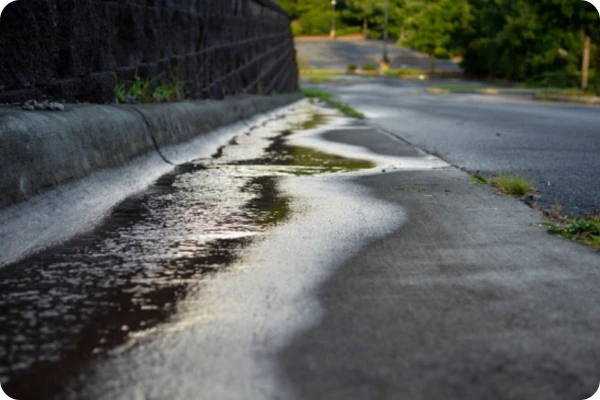
What Is a Stormwater Flow Path?
A stormwater flow path is the route water takes as it travels across surfaces during and after a rain event. This includes:
- Sheet flow across pavement or turf
- Concentrated flow in swales or channels
- Movement into structures like inlets, pipes, and basins
Flow paths are shaped by a combination of grading, elevation changes, surface materials, and drainage infrastructure. Ideally, they guide water efficiently toward designed collection and treatment points.
Why Water Pools in Some Areas
Pooling occurs when water is slowed, blocked, or unable to follow its intended path. Here are the most common causes:
1. Subtle Grading Issues
Even minor elevation inconsistencies can redirect water or create low spots.
- Settling asphalt or concrete
- Improper final grading after construction
- Landscape changes over time
A difference of just a fraction of an inch can determine whether water drains or sits.
2. Disrupted Flow Paths
Stormwater systems are designed with specific flow routes in mind – but those routes can be unintentionally altered.
Common disruptions include:
- Overgrown vegetation blocking swales or inflows
- Sediment buildup changing surface elevations
- Construction or utility work modifying grades
When flow paths are interrupted, water often collects in unintended areas.
3. Surface Material Differences
Not all surfaces handle water the same way.
- Impervious surfaces (asphalt, concrete) promote rapid runoff
- Permeable areas (turf, landscaped zones) absorb and slow water
When these surfaces meet, water can accumulate at transition points – especially if drainage isn’t properly integrated.
4. Compaction and Soil Conditions
Soil plays a bigger role than many property owners realize.
- Compacted soil reduces infiltration
- Clay-heavy soils drain slowly
- Saturated ground prevents additional absorption
This is why water may pool in landscaped areas even when nearby pavement drains efficiently.
5. Inlet and Structure Positioning
Stormwater structures only work if water can reach them.
Pooling often occurs when:
- Inlets are installed at slightly higher elevations than surrounding grade
- Flow paths don’t naturally direct water toward structures
- Debris blocks access points
Even a well-functioning inlet won’t capture water if it’s “uphill” from the problem area.
6. System Capacity vs. Flow Behavior
Not all pooling indicates undersized infrastructure.
In many cases:
- Water is temporarily stored in low areas before entering the system
- Flow is slowed intentionally to reduce downstream impact
However, persistent or expanding pooling may indicate a mismatch between design assumptions and real-world conditions.
The Role of Flow Paths in Stormwater Compliance
For regulated properties, flow paths aren’t just a design detail – they directly impact system performance and compliance.
Improper flow can lead to:
- Bypassing of treatment practices
- Erosion at unintended discharge points
- Reduced pollutant removal efficiency
In regions like Maryland, Northern Virginia, DC, and Delaware, where stormwater regulations are strict, disrupted flow paths can contribute to inspection failures and maintenance violations.
How to Identify Flow Path Problems on Your Property
You don’t need a full redesign to spot potential issues. Look for:
- Consistent pooling in the same locations
- Water staining or sediment trails showing unintended flow directions
- Bare or eroded areas where water is concentrating
- Vegetation patterns that indicate excess moisture
Inspections during or immediately after rain events are especially valuable for understanding real-world flow behavior.
How Flow Path Issues Are Resolved
Addressing pooling and flow path problems typically involves targeted adjustments rather than major reconstruction.
Common solutions include:
- Regrading localized low areas
- Clearing vegetation or sediment blockages
- Adjusting or resetting inlet elevations
- Restoring swales and conveyance features
- Improving surface transitions between paved and landscaped areas
The key is identifying why water is behaving the way it is, not just where it collects.
Why This Matters for Property Owners and Managers
Ignoring pooling can lead to bigger problems over time:
- Pavement deterioration
- Structural damage
- Mosquito breeding and safety concerns
- Accelerated sediment transport into stormwater systems
More importantly, it can signal underlying issues with how your stormwater system is functioning as a whole.
Final Takeaway: Water Always Tells a Story
Stormwater doesn’t move randomly – it follows the path of least resistance based on the conditions of your site. When water pools, it’s usually a sign that something in that path has changed.
Understanding and maintaining proper flow paths helps ensure your system works as intended, protects your property, and keeps you in compliance.
Need Help Evaluating Drainage Patterns?
If you’re seeing recurring pooling or unusual drainage behavior, it may be time for a professional evaluation. Identifying and correcting flow path issues early can prevent costly repairs and keep your stormwater system performing efficiently.
📞 Call us at (410) 231-3455 or 💬 Contact us online.



Real Results
iStormwater LLC was an excellent choice. They made the process of the Stormwater pond repairs seamless. They took charge of the project and got the project approved and passing the inspection. We highly recommend them and would use them again.
Incredible stormwater management service. The owner John consulted on a property I manage and ended up saving us thousands of dollars in environmental fees from the government. Now, our property is compliant with the EPA and we have a great partner to keep us maintained on stormwater regulations over time.
So helpful with all of my water issues.
Great communication and leadership and a family friendly atmosphere. Thank you John!
Buying a commercial property means evaluating much more than the building, parking lot, roof, utilities, and financials. The property's stormwater management system can carry its...
- Annapolis
- Anne Arundel County
- Baltimore County
- Baltimore
- Bel Air South
- Bethesda
- Bowie
- Cecil County
- Charles County
- Columbia
- Gaithersburg
- Glen Burnie
- Howard County
- Montgomery County
- Pasadena
- Prince George’s County
- Rockville
- Severna Park
- St. Mary’s County