

How Minor Stormwater Issues Become Major Repairs
Stormwater systems are designed to manage runoff efficiently, protect water quality, and help properties stay compliant with local and state regulations. But many costly stormwater failures don’t begin with catastrophic damage – they start as small, overlooked issues that gradually worsen over time.
A clogged inlet, minor erosion, standing water, or a partially blocked pipe may not seem urgent at first. However, when these problems are ignored, they can evolve into major structural repairs, system failures, compliance violations, and expensive emergency work.
For commercial property owners, facility managers, HOAs, developers, and municipalities, understanding how small stormwater problems escalate can help prevent unnecessary costs and reduce long-term risk.
Small Problems Rarely Stay Small
Stormwater systems function as connected infrastructure networks. When one component underperforms, the effects can spread throughout the system.
For example, a small amount of sediment buildup inside a catch basin may initially slow drainage. Over time, that sediment can move downstream, contribute to pipe blockages, reduce storage capacity, and increase pressure on other structures within the system.
Similarly, minor erosion around an outfall or pond edge may eventually undermine structural stability, damage nearby infrastructure, or lead to sediment discharge concerns that impact compliance.
Because many stormwater components are underground or out of sight, issues often progress long before they become visibly obvious.
Common Minor Stormwater Issues That Escalate
Sediment Accumulation
Sediment buildup is one of the most common early-stage stormwater problems. Even gradual accumulation can reduce flow capacity and system efficiency.
Left unaddressed, sediment can:
- Block pipes and outlet structures
- Reduce pond or BMP storage volume
- Increase flooding risk during storm events
- Cause premature wear on infrastructure
- Lead to pollutant discharge concerns
Routine maintenance is often far less expensive than sediment removal after a major blockage or system failure occurs.
Small Pipe Defects
Minor cracks, joint separation, or isolated pipe damage can worsen quickly as water infiltrates surrounding soils or debris enters the system.
Over time, these issues may contribute to:
- Sinkholes or soil instability
- Pipe collapse
- Infiltration and inflow problems
- Recurring backups
- Emergency repair situations
Addressing pipe issues early may allow for less disruptive rehabilitation options before full replacement becomes necessary.
Standing Water and Poor Drainage
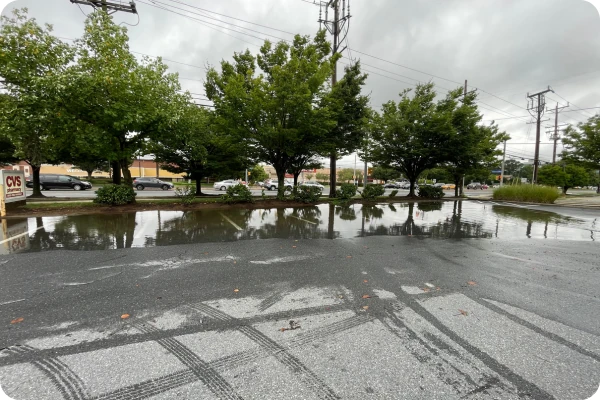
Water that consistently remains in unintended areas often signals an underlying problem within the stormwater system.
Potential causes include:
- Partial blockages
- Improper grading
- Outlet restrictions
- Sediment-filled structures
- Failing BMP components
Persistent standing water can accelerate pavement deterioration, contribute to erosion, damage landscaping, and create compliance concerns if treatment systems are no longer functioning properly.
Vegetation Overgrowth
Excessive vegetation around stormwater facilities can obstruct flow paths, hide structural damage, and limit access for inspections and maintenance.
In some cases, unmanaged vegetation may:
- Block inflow or outflow structures
- Damage liners or embankments through root intrusion
- Trap sediment and debris
- Prevent proper system function
Regular maintenance helps ensure facilities remain both functional and inspectable.
The Compliance Connection
Minor stormwater issues are not just maintenance concerns – they can also become compliance liabilities.
Many stormwater permits and local regulations require systems to remain operational and properly maintained. A neglected issue that impacts treatment performance, causes discharge problems, or contributes to flooding may eventually result in notices of violation, failed inspections, or mandated corrective action.
Common compliance-related consequences include:
- Failed BMP performance
- Sediment discharge into waterways
- Erosion and scour issues
- Inoperable treatment systems
- Missed maintenance requirements
- Increased scrutiny during inspections
In many cases, regulators focus not only on whether a problem exists, but whether the property owner took reasonable steps to identify and address issues before they worsened.
Delayed Maintenance Often Costs More
One of the biggest misconceptions about stormwater infrastructure is that delaying maintenance saves money.
In reality, postponing small repairs frequently leads to:
- Larger repair scopes
- Emergency response costs
- Property damage
- Increased downtime
- More invasive construction
- Higher compliance risk
For example, clearing a partially obstructed pipe is significantly less costly than excavating and replacing a collapsed section after years of neglected buildup and pressure.
Similarly, repairing minor erosion early is far more manageable than reconstructing a failed embankment or stabilizing a severely damaged outfall area.
Preventive Maintenance Helps Protect Infrastructure
A proactive stormwater maintenance strategy helps identify issues before they become major operational or compliance problems.
Effective preventive maintenance programs often include:
- Routine inspections
- Sediment and debris removal
- Pipe and structure assessments
- Vegetation management
- Erosion monitoring
- Repair tracking and documentation
Documentation is especially important for compliance purposes, as maintenance records can help demonstrate responsible system management during inspections or audits.
Warning Signs Property Owners Shouldn’t Ignore
Some stormwater problems develop gradually, making early warning signs easy to overlook.
Property owners and managers should pay attention to:
- Slow drainage after rain events
- Recurring ponding water
- Sediment buildup around structures
- Erosion near outfalls or embankments
- Sinkholes or depressed pavement
- Unusual odors or discoloration
- Overflow during moderate storms
- Damaged or blocked inlet structures
Addressing these indicators early can help avoid more serious repairs later.
Long-Term Stormwater Performance Starts With Early Action
Stormwater systems require ongoing attention to continue functioning effectively and remain compliant over time. While small issues may appear manageable in the short term, they often become significantly more expensive and disruptive when ignored.
Proactive inspections, routine maintenance, and timely repairs help extend infrastructure lifespan, improve system performance, and reduce the likelihood of costly compliance problems.
Taking action early is often the difference between a manageable maintenance item and a major capital repair.
Need Help Identifying Stormwater Issues Before They Escalate?
iSTORMWATER provides stormwater inspections, maintenance, repairs, and compliance support for commercial, industrial, municipal, and development properties throughout the Mid-Atlantic region.
Our team helps property owners identify small issues early – before they become larger operational or regulatory problems.
📞 Call us at (410) 231-3455 or 💬 Contact us online.


Real Results
iStormwater LLC was an excellent choice. They made the process of the Stormwater pond repairs seamless. They took charge of the project and got the project approved and passing the inspection. We highly recommend them and would use them again.
Incredible stormwater management service. The owner John consulted on a property I manage and ended up saving us thousands of dollars in environmental fees from the government. Now, our property is compliant with the EPA and we have a great partner to keep us maintained on stormwater regulations over time.
So helpful with all of my water issues.
Great communication and leadership and a family friendly atmosphere. Thank you John!
Belowground stormwater treatment systems do a significant amount of work out of sight. While the surface of a property may appear clean and well-maintained, underground...
- Annapolis
- Anne Arundel County
- Baltimore County
- Baltimore
- Bel Air South
- Bethesda
- Bowie
- Cecil County
- Charles County
- Columbia
- Gaithersburg
- Glen Burnie
- Howard County
- Montgomery County
- Pasadena
- Prince George’s County
- Rockville
- Severna Park
- St. Mary’s County