

Stormwater Retention Pond Maintenance Guide
Retention pond maintenance helps preserve storage capacity, maintain proper drainage, manage vegetation and sediment, and identify erosion or structural problems before they become larger repairs. For property owners, HOAs, and facility managers responsible for a stormwater pond, maintenance may include routine inspections, vegetation and debris removal, erosion control, sediment management, and repairs to inlet and outlet structures.
Understanding what to look for – and addressing problems before they interfere with the facility’s function – is an important part of long-term stormwater pond management. This guide covers common retention pond maintenance needs, warning signs, maintenance responsibilities, and when routine upkeep may need to become corrective maintenance.
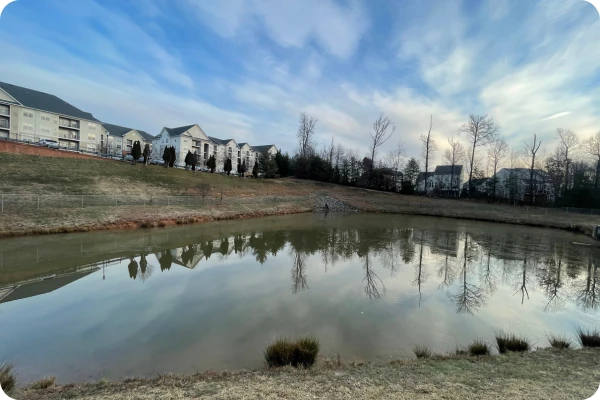
What Is a Retention Pond?
A retention pond, also known as a wet pond, is a stormwater management facility designed to collect and manage runoff while maintaining a permanent pool of water. As runoff enters the pond, sediment and some pollutants can settle before water is discharged through the facility’s outlet system.
Retention ponds differ from detention ponds, which are generally designed to temporarily store runoff and release it over time rather than maintain a permanent pool. Both types of stormwater ponds require ongoing inspection and maintenance to continue functioning as designed.
Why Retention Pond Maintenance Matters
Stormwater ponds receive runoff carrying sediment, debris and other materials from the surrounding drainage area. Over time, those materials can accumulate while vegetation grows, slopes erode and structural components deteriorate.
Without appropriate maintenance, these conditions can restrict flow, reduce available storage, obstruct access to important components and contribute to larger repair needs.
Regular retention pond maintenance can help:
- Preserve the pond’s intended storage and treatment function
- Keep inlets, outlets and other drainage structures accessible and unobstructed
- Identify erosion before it progresses
- Manage excessive or unwanted vegetation
- Monitor sediment accumulation
- Identify damaged structural or mechanical components
- Address maintenance deficiencies identified during inspections
- Reduce the likelihood that smaller issues develop into more extensive repairs
Maintenance requirements vary by facility, making routine observation and inspection important for understanding the condition of an individual pond.
What Does Retention Pond Maintenance Include?
Retention pond maintenance is more than mowing the surrounding area. A complete maintenance approach considers the pond itself, surrounding slopes, vegetation, drainage structures and other components that allow the facility to manage stormwater.
Retention Pond Inspections
Inspections provide an opportunity to identify developing problems before they significantly affect the facility.
A retention pond inspection may evaluate:
- Inlets and outlets
- Embankments and side slopes
- Erosion or unstable areas
- Sediment accumulation
- Vegetation condition
- Trash and debris
- Signs of blockage or restricted flow
- Pipes, headwalls and control structures
- Access areas
- Unusual water levels or drainage conditions
Inspection findings can then be used to determine what maintenance or repairs are needed and establish priorities.
Vegetation Management
Vegetation plays an important role around stormwater ponds by helping stabilize soil and reduce erosion. However, uncontrolled growth can create its own problems.
Excessive vegetation may restrict access, obscure structures that need to be inspected, interfere with intended drainage patterns or contribute to woody growth in areas where it is not appropriate.
Vegetation maintenance can include mowing, trimming, removing unwanted woody vegetation and managing invasive species while preserving appropriate groundcover needed for slope stabilization.
Trash and Debris Removal
Trash, leaves, branches and other debris can collect within a retention pond or around its drainage structures.
Debris around an inlet or outlet can restrict stormwater flow and make it difficult to inspect the structure for damage. Routine debris removal helps keep critical components visible and accessible while reducing the potential for blockages.
Sediment Monitoring and Removal
Sediment naturally accumulates as runoff carries soil and other particles into a stormwater pond. The presence of some sediment does not automatically mean a pond needs to be dredged, but significant accumulation can eventually affect storage, drainage structures or the facility’s intended performance.
Sediment levels should be monitored as part of ongoing pond inspections. When accumulation becomes excessive or interferes with facility components or design capacity, sediment removal may be necessary.
Larger sediment removal projects may require specialized equipment, access planning and consideration of how removed material will be handled.
Erosion and Bank Stabilization
Erosion can develop along pond banks, slopes, channels, inlets, outlets and other areas exposed to concentrated stormwater flow.
Signs may include bare soil, rills, gullies, undercut areas or displaced stabilization materials. If left unaddressed, erosion can continue to worsen and introduce additional sediment into the pond.
Maintenance may involve stabilizing affected areas, restoring vegetation, replacing riprap or addressing the underlying drainage condition contributing to the erosion.
Inlet and Outlet Maintenance
Inlets and outlets are critical to how stormwater enters, moves through and leaves a pond.
Sediment, vegetation and debris can obstruct these areas, while concrete, pipes, headwalls, trash racks and other components may deteriorate or become damaged over time.
Keeping these structures clear and addressing deficiencies helps maintain the intended flow path through the facility.
Structural and Mechanical Components
Some stormwater ponds contain additional components such as risers, weirs, orifices, valves, gates or other control structures.
These components should be evaluated for signs of damage, corrosion, blockage, displacement or deterioration. Problems affecting a control structure may require more than routine pond maintenance and should be addressed before the condition progresses.
Common Retention Pond Maintenance Problems
Many pond maintenance needs develop gradually. Recognizing common problems can make it easier to address them before they require more extensive corrective work.
Sediment accumulation: Sediment can collect near inflow areas, within channels and across the pond bottom. Excessive accumulation can reduce available capacity or interfere with drainage structures.
Overgrown vegetation: Dense vegetation can limit access, hide erosion or structural problems and obstruct areas intended to convey stormwater.
Erosion: Unstable banks, bare soil and eroded channels can contribute additional sediment to the pond and worsen if the underlying cause is not corrected.
Clogged inlets or outlets: Debris, vegetation and sediment can restrict flow through structures responsible for moving water into and out of the pond.
Damaged structures: Pipes, headwalls, risers and other components can crack, shift, corrode or deteriorate.
Trash and debris: Accumulated debris can affect drainage, interfere with inspection and contribute to poor overall facility condition.
Unexpected water levels: Water levels that are noticeably different from normal conditions may warrant further evaluation, particularly when accompanied by slow drainage, blocked structures or other visible deficiencies.
Signs Your Retention Pond May Need Maintenance
Some maintenance needs are obvious, while others become apparent only during an inspection. Property owners and managers should pay attention to changes in the pond and surrounding area.
Potential warning signs include:
- Heavy vegetation blocking access or covering stormwater structures
- Woody vegetation growing on embankments or around structures where it should not be established
- Visible sediment accumulation
- Trash or debris around inlets and outlets
- Bare or eroded areas along banks and slopes
- Gullies or channels developing from concentrated runoff
- Damaged pipes, headwalls, risers or control structures
- Displaced riprap or other stabilization materials
- Unusual standing water or changes in normal pond water levels
- Evidence that water is not entering or leaving the pond as expected
- Maintenance deficiencies identified during a stormwater inspection
These conditions do not always indicate a major repair is needed. Addressing them early can often prevent a relatively manageable maintenance issue from progressing.
How Often Should a Retention Pond Be Maintained?
There is no single retention pond maintenance schedule that applies to every facility.
Maintenance needs can vary depending on the pond’s design, drainage area, surrounding land use, sediment load, vegetation, weather conditions, previous maintenance history and applicable local requirements.
Rather than relying solely on a fixed schedule, property owners and managers should use inspections and observed site conditions to determine what work is needed and when.
A pond that receives a large sediment load, for example, may require more frequent attention than one with effective upstream pretreatment. Similarly, significant storms or changes in drainage conditions can create maintenance needs between normally scheduled inspections.
The facility’s approved plans, maintenance agreement and applicable jurisdictional requirements may also establish specific inspection or maintenance obligations.
Who Is Responsible for Retention Pond Maintenance?
Responsibility for retention pond maintenance depends on the ownership and agreements associated with the individual facility.
For privately owned stormwater facilities, responsibility may fall to a commercial property owner, HOA or COA, property management company or another party identified in the property’s maintenance documents.
Public facilities may be maintained by a municipality or other government entity.
However, the presence of a stormwater facility on or adjacent to a property does not by itself establish who is responsible for maintaining it. Easements, maintenance agreements, plats, property records and local stormwater requirements can all affect responsibility.
If ownership or maintenance responsibility is unclear, review the property’s governing documents and contact the appropriate local stormwater authority before assuming responsibility belongs to another party.
Routine vs. Corrective Retention Pond Maintenance
Not every pond maintenance project involves the same level of work. Understanding the difference between routine and corrective maintenance can help property owners plan ahead.
Routine Pond Maintenance
Routine maintenance is intended to keep a functioning stormwater pond in good condition and address normal wear and accumulation.
This may include:
- Inspections
- Mowing and vegetation management
- Trash and debris removal
- Clearing accessible inlet and outlet areas
- Minor erosion correction
- Monitoring sediment accumulation
- Maintaining access to stormwater structures
Corrective Pond Maintenance
Corrective maintenance becomes necessary when deficiencies have progressed beyond routine upkeep or are affecting the facility’s condition or performance.
Depending on the facility, corrective work may include:
- Significant sediment removal or pond dredging
- Major erosion stabilization
- Inlet or outlet repairs
- Pipe repairs
- Control structure repairs or replacement
- Embankment repairs
- Riprap restoration
- Rehabilitation of deteriorated areas
- Corrections required following a failed inspection or notice of violation
Routine maintenance cannot prevent every repair, but identifying and addressing problems earlier can often limit how far deterioration progresses.
Retention Pond Maintenance and Compliance
Stormwater pond maintenance responsibilities and inspection requirements can vary by jurisdiction and by the facility’s approved design, maintenance agreement and other governing documents.
Property owners and managers should understand the requirements that apply to their specific facility and address deficiencies identified during inspections. Maintaining records of inspections, completed maintenance and repairs can also help document the property’s ongoing stormwater management efforts.
If an inspection identifies deficiencies or a property receives a stormwater violation, the required corrective work may go beyond normal routine maintenance. A stormwater contractor can help evaluate the facility, identify necessary maintenance or repairs and complete corrective work needed to address documented deficiencies.
Professional Retention Pond Maintenance
Some routine pond upkeep can be incorporated into normal property maintenance, but stormwater facilities can also develop conditions requiring specialized equipment and experience.
Professional stormwater pond maintenance may be appropriate when a facility has significant sediment accumulation, extensive erosion, damaged drainage structures, difficult access, inspection deficiencies or maintenance needs that extend beyond routine landscaping.
iSTORMWATER provides stormwater pond inspections, preventative maintenance, sediment removal, vegetation management, erosion repair, structural repairs and corrective maintenance for commercial properties, HOAs and other stormwater facility owners throughout Maryland, Washington, DC, and Northern Virginia.
Whether you are planning routine retention pond maintenance or addressing deficiencies identified during an inspection, our team can evaluate the condition of your facility and determine the appropriate next steps.
Call iSTORMWATER at (410) 231-3455 or contact us online to schedule stormwater pond maintenance or inspection services.


Real Results
iStormwater LLC was an excellent choice. They made the process of the Stormwater pond repairs seamless. They took charge of the project and got the project approved and passing the inspection. We highly recommend them and would use them again.
Incredible stormwater management service. The owner John consulted on a property I manage and ended up saving us thousands of dollars in environmental fees from the government. Now, our property is compliant with the EPA and we have a great partner to keep us maintained on stormwater regulations over time.
So helpful with all of my water issues.
Great communication and leadership and a family friendly atmosphere. Thank you John!
Buying a commercial property means evaluating much more than the building, parking lot, roof, utilities, and financials. The property's stormwater management system can carry its...
- Annapolis
- Anne Arundel County
- Baltimore County
- Baltimore
- Bel Air South
- Bethesda
- Bowie
- Cecil County
- Charles County
- Columbia
- Gaithersburg
- Glen Burnie
- Howard County
- Montgomery County
- Pasadena
- Prince George’s County
- Rockville
- Severna Park
- St. Mary’s County