

Permeable Pavement Clogging: Why Infiltration Declines and What to Do
Permeable pavement is designed to let stormwater move through the surface instead of running off as quickly as it would from conventional pavement. But that performance depends on one critical factor: water must still be able to pass through the pavement.
Over time, sediment, dirt, organic debris, and other fine materials can fill the openings that allow water to infiltrate. As those pathways become restricted, infiltration slows and the pavement may begin to hold water longer after rainfall.
That does not always mean the pavement has failed.
In many cases, declining infiltration is a maintenance issue that can be addressed before more extensive repairs are necessary. The key is understanding where the clogging is occurring, what is causing it, and whether the problem is limited to the surface or extends deeper into the stormwater system.
What Does It Mean When Permeable Pavement Becomes Clogged?
Permeable pavement relies on open spaces that allow water to move through the surface.
Those openings differ depending on the type of pavement installed.
Common permeable pavement systems include:
- Permeable interlocking concrete pavement (PICP), where water passes primarily through aggregate-filled joints between individual pavers
- Pervious concrete, where water moves through interconnected voids within the concrete itself
- Porous asphalt, which also relies on interconnected pore space within the pavement
When fine material accumulates in those openings, less space remains available for water to move through.
That is what we mean when we refer to permeable pavement clogging.
The process is often gradual. A pavement area may continue to drain for some time even as its infiltration capacity declines.
Eventually, however, the effects may become visible at the surface.
What Causes Permeable Pavement to Clog?
Sediment is one of the most common causes of reduced infiltration.
Potential sources include:
- Soil from adjacent landscaped areas
- Erosion upstream of the pavement
- Dirt tracked onto the surface by vehicles
- Fine material from nearby construction
- Leaves and organic debris
- Grass clippings
- Mulch
- Sand used during winter weather
- Sediment carried by stormwater runoff
The amount of material reaching the pavement can vary significantly from one property to another.
A parking area surrounded by mature landscaping may accumulate leaves and organic debris. A pavement system downstream of bare soil may receive fine sediment every time it rains. A site undergoing construction may experience a sudden increase in sediment loading.
For that reason, maintaining permeable pavement is not only about cleaning the pavement itself. It also requires understanding where the sediment is coming from.
How Clogging Differs Between Permeable Pavers and Pavement
The term “permeable pavement” covers several different systems, and they do not all clog in exactly the same way.
Permeable interlocking pavers
Permeable interlocking concrete pavers are installed with intentionally open joints between the individual units. Those joints are typically filled with clean, open-graded aggregate.
Stormwater enters the system primarily through these joints.
As sediment and organic material accumulate, the upper portion of the joint material can become clogged.
Signs may include:
- Dark or visibly dirty joints
- Sediment packed between pavers
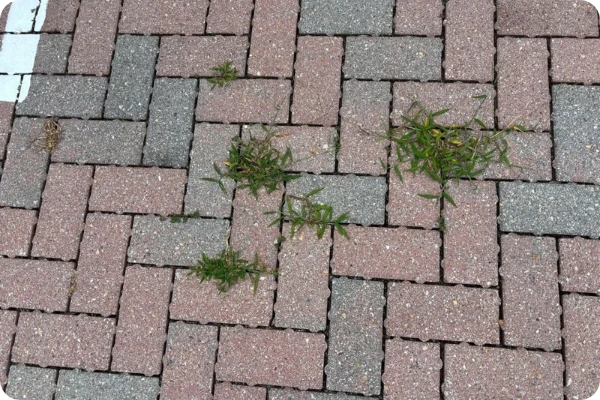
- Vegetation growing in joints
- Missing or contaminated joint aggregate
- Water collecting over sections that previously drained quickly
Joint condition is therefore an important part of evaluating permeable paver performance.
Pervious concrete
Pervious concrete does not rely on joints in the same way.
Instead, water moves through interconnected voids within the concrete itself. Fine sediment can enter and partially block those pores, reducing the amount of water that can pass through the pavement.
A clogged pervious concrete surface may look relatively normal even while infiltration is declining.
Porous asphalt
Porous asphalt operates similarly in that stormwater passes through interconnected pore spaces within the pavement.
Sediment accumulation can gradually reduce those pathways and slow drainage.
The underlying maintenance principle is the same for all three systems: keep the pathways that move stormwater through the pavement as open as possible.
However, the appropriate restoration method can differ depending on the surface type.
What Are the Signs That Infiltration Is Declining?
Permeable pavement does not need to be completely blocked before there is a problem.
Several conditions can suggest that infiltration is declining.
Water remains on the surface longer than expected
Some temporary surface water during intense rainfall is not necessarily unusual.
The concern is when water routinely remains on the pavement well after surrounding areas have drained or when ponding becomes noticeably worse over time.
Certain sections drain more slowly than others
Localized slow drainage can point to concentrated sediment accumulation or a problem beneath a particular section of pavement.
Paver joints appear filled with fine material
With permeable pavers, the joints should contain appropriate aggregate rather than compacted soil or sediment.
If the joints begin to resemble conventional sand-filled joints, infiltration may be reduced.
Sediment or debris is accumulating on the surface
Heavy surface sediment loading increases the likelihood that fine particles are also moving into the pavement openings.
Vegetation begins growing in the openings
Some isolated vegetation may not indicate a serious problem, but widespread growth in paver joints can be a sign that soil and organic material have accumulated.
Drainage behavior changes after storms
Property managers who routinely observe a site may notice that an area that once drained quickly now remains wet longer.
That change can be an important early indicator.
Is Surface Ponding Always Caused by Clogging?
No.
This distinction is important.
Permeable pavement may appear clogged when the actual restriction exists somewhere deeper in the system.
Depending on the design, a permeable pavement installation may include:
- An aggregate storage layer
- Underdrains
- Outlet structures
- Overflow structures
- Edge drains
- Observation or inspection ports
- Connections to other stormwater infrastructure
If one of these components is blocked, damaged, or no longer functioning properly, stormwater may not move through the system even if the pavement surface itself is relatively clean.
Persistent ponding therefore should not automatically be treated as a surface-cleaning problem.
If appropriate cleaning does not restore drainage, the next step should be to investigate the system beneath the surface.
Can Clogged Permeable Pavement Be Restored?
Often, yes.
The appropriate restoration method depends on the pavement type, how severe the clogging is, and whether the problem is limited to the surface.
Vacuum sweeping
Vacuum sweeping is one of the most common methods used to remove sediment from permeable pavement.
The goal is to remove fine material from the pavement openings before it becomes more deeply embedded.
Routine vacuum maintenance can also help prevent severe clogging from developing in the first place.
Joint restoration for permeable pavers
Permeable pavers may require additional attention if their joint material has become heavily contaminated or depleted.
Depending on the condition, restoration may involve removing clogged material and replacing it with appropriate clean aggregate.
This is specific to permeable interlocking pavement and should not be treated as a universal maintenance method for all permeable pavement.
More intensive surface restoration
When routine cleaning is no longer effective, more aggressive restoration methods may sometimes be appropriate.
The correct method depends on the pavement type, system specifications, condition of the surface, and project requirements.
That is one reason a clogged pavement should be evaluated before assuming that one cleaning method will work for every system.
Why Preventing Sediment Matters More Than Repeated Cleaning
If a permeable pavement area repeatedly clogs, the pavement may not be the real source of the problem.
Consider an area where runoff from exposed soil continually washes onto the pavement.
Cleaning that pavement may temporarily improve infiltration, but the sediment will continue to return until the upstream condition is corrected.
Common sediment sources worth investigating include:
- Eroding landscaped areas
- Unstabilized slopes
- Bare soil
- Mulch migration
- Construction activity
- Improper drainage patterns
- Vehicle tracking from unpaved areas
- Sediment accumulating in upstream structures
Reducing the amount of material reaching the pavement can make routine maintenance far more effective.
Construction Can Quickly Overwhelm Permeable Pavement
Construction sediment is particularly problematic because large amounts of fine material can reach the pavement in a short period.
Permeable pavement should be protected from sediment generated by nearby earth disturbance.
If soil is allowed to wash repeatedly across the surface during construction, fine particles can enter the pavement openings and significantly reduce infiltration.
Once surrounding areas are stabilized, the pavement should be inspected for sediment accumulation and cleaned if necessary.
Preventing sediment from entering the system is considerably easier than restoring a heavily clogged surface.
Winter Maintenance Can Contribute to Clogging
Winter maintenance practices can also affect permeable pavement performance.
Sand and other fine materials can enter pavement openings and contribute to clogging.
For properties with permeable pavement, winter maintenance plans should account for the type of pavement installed and avoid unnecessary introduction of fine material where possible.
Snowplowing practices also matter, particularly with permeable interlocking pavers.
Plows should be operated carefully to reduce the risk of catching, displacing, or damaging individual pavers.
The correct winter maintenance approach should follow the requirements of the pavement system and the property’s approved maintenance plan.
What If Cleaning Does Not Restore Infiltration?
If surface cleaning has been performed correctly and the pavement still does not drain as expected, that is a sign that the problem may extend deeper into the system.
Possible issues can include:
- Sediment accumulation below the surface
- Restricted aggregate storage layers
- Blocked underdrains
- Clogged outlet structures
- Subgrade problems
- Settlement
- Damage to drainage components
- Poorly functioning connections to downstream stormwater infrastructure
At that point, repeatedly cleaning the surface may provide little benefit.
The system should be evaluated to determine where water is being restricted.
This is the difference between treating a maintenance symptom and diagnosing a stormwater system problem.
How Property Managers Can Reduce the Risk of Clogging
Permeable pavement tends to perform better when maintenance is proactive rather than reactive.
Property owners and managers can reduce the risk of infiltration loss by:
- Keeping sediment and landscaping debris off the pavement
- Correcting nearby erosion
- Protecting pavement during construction
- Avoiding unnecessary use of sand
- Monitoring paver joints where applicable
- Scheduling appropriate vacuum cleaning
- Inspecting the pavement after significant sediment events
- Watching for changes in drainage after storms
- Maintaining upstream and downstream stormwater structures
- Investigating recurring problem areas instead of repeatedly treating the surface
A pavement system does not have to wait until visible ponding occurs before maintenance is warranted.
Changes in surface condition or drainage behavior can provide earlier warning.
When Is Permeable Pavement Clogging a Maintenance Issue vs. a Repair Issue?
This is one of the most useful distinctions property managers can make.
A maintenance issue generally involves material that has accumulated in or near the pavement surface and can potentially be removed through appropriate cleaning or restoration.
A repair issue may involve:
- Significant settlement
- Broken or displaced pavers
- Structural pavement deterioration
- Damaged drainage components
- Failed underdrains
- Problems within the aggregate base
- Repeated ponding that does not improve after cleaning
The earlier declining infiltration is identified, the greater the chance that the problem can be addressed through routine or restorative maintenance rather than more extensive repairs.
The Goal Is to Preserve Infiltration
Permeable pavement is not simply a different type of parking or walking surface. It is part of the property’s stormwater management system.
Its performance depends on water being able to move through the surface and into the layers below.
Whether the property has permeable interlocking pavers, pervious concrete, or porous asphalt, the central maintenance goal is the same:
Prevent sediment and debris from blocking the pathways that allow stormwater to infiltrate.
When those pathways begin to clog, identifying the cause early can help determine whether the system needs routine cleaning, targeted restoration, or a deeper inspection of the drainage components below.
Permeable Pavement Inspection, Cleaning, and Repair
If permeable pavement is ponding, draining more slowly than it once did, or showing signs of sediment accumulation, the first step is determining where the restriction is occurring.
iSTORMWATER provides stormwater inspection, maintenance, cleaning, and repair services for commercial and community-managed properties throughout Maryland, Washington, DC, Northern Virginia, and Delaware.
Our team can evaluate pavement condition, sediment accumulation, infiltration performance, and related stormwater components to determine whether the problem can be addressed through maintenance or requires additional corrective work.
Addressing reduced infiltration early can help prevent a manageable maintenance issue from becoming a more significant stormwater repair.
📞 Call us at (410) 231-3455 or 💬 Contact us online.



Real Results
iStormwater LLC was an excellent choice. They made the process of the Stormwater pond repairs seamless. They took charge of the project and got the project approved and passing the inspection. We highly recommend them and would use them again.
Incredible stormwater management service. The owner John consulted on a property I manage and ended up saving us thousands of dollars in environmental fees from the government. Now, our property is compliant with the EPA and we have a great partner to keep us maintained on stormwater regulations over time.
So helpful with all of my water issues.
Great communication and leadership and a family friendly atmosphere. Thank you John!
Buying a commercial property means evaluating much more than the building, parking lot, roof, utilities, and financials. The property's stormwater management system can carry its...
- Annapolis
- Anne Arundel County
- Baltimore County
- Baltimore
- Bel Air South
- Bethesda
- Bowie
- Cecil County
- Charles County
- Columbia
- Gaithersburg
- Glen Burnie
- Howard County
- Montgomery County
- Pasadena
- Prince George’s County
- Rockville
- Severna Park
- St. Mary’s County