

Riprap in Stormwater Facilities: More Than Just Rock
When people think about stormwater infrastructure, they often focus on ponds, pipes, inlets, or underground facilities. Yet one of the most important components of an effective stormwater management system is also one of the simplest: riprap.
At first glance, riprap may appear to be nothing more than a pile of large rocks. In reality, properly designed and maintained riprap plays a critical role in preventing erosion, protecting stormwater infrastructure, and helping stormwater systems perform as intended.
Whether installed around pipe outfalls, spillways, channels, or detention ponds, riprap serves as a durable form of erosion protection that helps reduce costly repairs and protects downstream waterways.
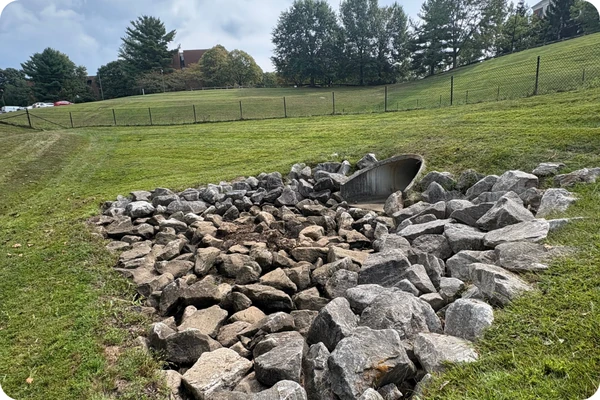
What Is Riprap?
Riprap is a layer of durable, angular stone placed in areas where flowing stormwater has the potential to cause erosion. Unlike smooth river rock, riprap is made from rough, angular stones that interlock, creating a stable surface capable of resisting the force of moving water.
Riprap is commonly specified by engineers based on stone size, expected flow velocities, slope, and soil conditions. In many installations, a geotextile filter fabric or granular bedding layer is placed beneath the stone to help prevent underlying soil from washing away while allowing water to drain.
The purpose of riprap is not to stop water from flowing. Instead, it slows water, dissipates energy, and protects the surrounding soil from erosion.
Why Riprap Is Important in Stormwater Systems
Stormwater systems are designed to safely collect, convey, and discharge runoff during rain events. As water accelerates through pipes, culverts, and channels, it gains energy that can quickly erode exposed soil if left unprotected.
Riprap helps by:
- Dissipating the energy of fast-moving water
- Preventing soil erosion around stormwater structures
- Stabilizing slopes and embankments
- Protecting pipe outlets from scour
- Reducing sediment entering stormwater facilities
- Extending the service life of stormwater infrastructure
Without adequate erosion protection, even a properly designed stormwater system can experience significant damage over time.
Common Locations Where Riprap Is Used
Riprap can be found throughout all types of stormwater systems.
Pipe Outfalls
One of the most common applications is below stormwater pipe outlets. Water leaving a pipe often travels at high velocity, creating concentrated flow that can quickly erode surrounding soil.
A riprap apron absorbs this energy before it reaches natural ground.
Spillways
Emergency spillways for detention and retention ponds frequently use riprap to protect against erosion during larger storm events when water flows over or around embankments.
Drainage Channels
Channels carrying concentrated stormwater runoff often include riprap along the bottom, sides, or both to prevent channel degradation.
Pond Embankments
Certain pond slopes or shoreline areas may use riprap to minimize erosion caused by fluctuating water levels, wave action, or concentrated inflow.
Culverts
Riprap is commonly installed at culvert entrances and exits where concentrated flow has the greatest potential to undermine surrounding soils.
How Riprap Works
Riprap functions by reducing the speed and force of flowing water.
As stormwater moves across the uneven surface of the stone, turbulence is created between the rocks. This turbulence slows the water and spreads its energy across a larger area instead of allowing it to erode a single location.
The spaces between the stones also help reduce flow velocity while allowing water to continue draining naturally.
Properly sized stone is essential. Stones that are too small may be displaced during heavy storms, while oversized stone may be unnecessarily expensive without providing additional benefit.
Common Problems with Riprap
Although riprap is durable, it is not maintenance-free. Over time, several issues can reduce its effectiveness.
Displaced Stone
Heavy rainfall, high flows, or repeated storm events can shift individual stones out of place.
Gaps create weak points where erosion can begin beneath or around the riprap.
Undermining
If water begins flowing beneath the riprap due to failed filter fabric, poor installation, or erosion at the edges, the stone may eventually collapse or settle.
Sediment Accumulation
Sediment can fill the spaces between stones, reducing drainage capacity and allowing vegetation to establish where it may not be desired.
Vegetation Growth
Some vegetation can help stabilize surrounding areas, but excessive woody vegetation or invasive plants growing through riprap may displace stone and interfere with inspections or maintenance.
Scour Beyond the Protected Area
If the riprap installation is too short or improperly designed, erosion may simply begin downstream of the protected section.
Signs Riprap Needs Maintenance
Routine inspections can identify problems before they become major repairs.
Watch for:
- Missing or displaced stone
- Exposed soil beneath the riprap
- Gullies forming around the edges
- Significant sediment buildup
- Sinkholes or settling near the installation
- Undermined pipe outlets
- Large vegetation growing through the stone
- Evidence of erosion downstream
Addressing these issues early helps maintain both erosion protection and the performance of the overall stormwater system.
Does Riprap Require Maintenance?
Yes.
While riprap generally requires less maintenance than many other stormwater practices, periodic inspections remain important.
Maintenance may include:
- Replacing displaced stone
- Adding stone where erosion has occurred
- Removing excessive sediment
- Controlling unwanted vegetation
- Repairing damaged filter fabric during reconstruction
- Restoring eroded edges
Maintenance is often recommended after major storm events, particularly if high flows have occurred.
Can Riprap Fail?
Yes.
Riprap failures are usually the result of one or more of the following:
- Improper stone sizing
- Poor installation practices
- Inadequate filter fabric
- Insufficient thickness
- Poor drainage beneath the stone
- Changes in upstream runoff volumes
- Lack of routine maintenance
When riprap fails, erosion often accelerates rapidly because concentrated stormwater follows the newly exposed soil.
Riprap Supports Long-Term Stormwater Performance
Riprap is one component of a much larger stormwater management system. Its condition directly affects nearby structures, including pipes, headwalls, culverts, channels, detention ponds, and outfalls.
When erosion is controlled, sediment is less likely to enter downstream stormwater facilities. This helps reduce maintenance needs elsewhere in the system while protecting water quality and preserving the designed function of stormwater infrastructure.
Property managers who include riprap inspections as part of their routine stormwater maintenance program are often able to identify developing erosion issues before they require significant reconstruction.
Professional Riprap Inspection and Repair
Riprap may appear simple, but proper evaluation requires understanding how water moves through an entire stormwater system. An erosion problem at one location may actually originate upstream due to damaged pipes, changing drainage patterns, or increased runoff.
Professional inspections can identify displaced stone, developing scour, settlement, and other conditions that may compromise long-term system performance. Timely repairs help protect stormwater infrastructure, reduce future maintenance costs, and support compliance with stormwater management requirements.
At iSTORMWATER, we inspect, maintain, and repair stormwater systems throughout Maryland, Northern Virginia, Washington, DC, and Delaware. From erosion control and riprap restoration to pipe repairs and detention pond maintenance, our team helps commercial property owners and managers keep their stormwater infrastructure functioning as designed.
📞 Call us at (410) 231-3455 or 💬 Contact us online.



Real Results
iStormwater LLC was an excellent choice. They made the process of the Stormwater pond repairs seamless. They took charge of the project and got the project approved and passing the inspection. We highly recommend them and would use them again.
Incredible stormwater management service. The owner John consulted on a property I manage and ended up saving us thousands of dollars in environmental fees from the government. Now, our property is compliant with the EPA and we have a great partner to keep us maintained on stormwater regulations over time.
So helpful with all of my water issues.
Great communication and leadership and a family friendly atmosphere. Thank you John!
Buying a commercial property means evaluating much more than the building, parking lot, roof, utilities, and financials. The property's stormwater management system can carry its...
- Annapolis
- Anne Arundel County
- Baltimore County
- Baltimore
- Bel Air South
- Bethesda
- Bowie
- Cecil County
- Charles County
- Columbia
- Gaithersburg
- Glen Burnie
- Howard County
- Montgomery County
- Pasadena
- Prince George’s County
- Rockville
- Severna Park
- St. Mary’s County