

Stormwater Catch Basins: Common Problems and Maintenance Needs
Catch basins are easy to overlook. Located beneath grates and curb inlets throughout parking lots, roadways, commercial properties, and communities, these structures collect stormwater runoff and direct it into the larger drainage system.
But catch basins do more than provide an entry point for runoff. Many include a sump below the outlet pipe where sediment and heavier debris can settle before water continues downstream. Over time, that material accumulates and reduces the basin’s available capacity.
Without routine catch basin inspection and maintenance, a relatively small drainage component can contribute to standing water, clogged pipes, poor drainage, and other problems throughout a stormwater system.
What Is a Stormwater Catch Basin?
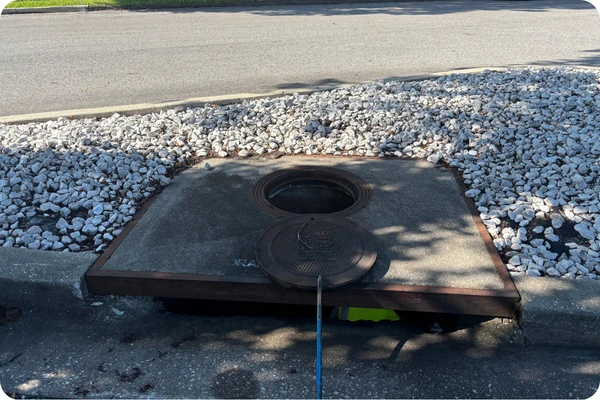
A catch basin is an underground structure that receives runoff from surrounding paved or developed surfaces. Water typically enters through a grate or curb opening before flowing through an outlet pipe into another part of the stormwater system.
Many catch basins have a sump below the outlet. Sediment, grit, leaves, trash, and other heavier material can settle into this area instead of immediately moving downstream.
This makes the catch basin an important first line of defense for the drainage network. However, its ability to collect material depends on having enough available sump capacity. Once sediment and debris accumulate, routine cleaning becomes necessary.
Catch basins should not be confused with proprietary treatment systems installed inside or alongside drainage structures. Some catch basins contain inserts, filters, or other treatment components with their own maintenance requirements. A standard catch basin primarily serves as part of the site’s collection and conveyance system.
Why Catch Basin Maintenance Matters
Every time runoff enters a catch basin, it may carry material from the surrounding drainage area. On a commercial property, that can include:
- Soil and sediment
- Leaves and organic material
- Trash and litter
- Sand and grit
- Mulch and landscaping material
- Material transported from parking lots and paved surfaces
Some of this material settles into the basin while lighter debris may collect around the grate or travel farther into the drainage network.
As accumulation increases, there is less space available for additional sediment. Material can also reach the elevation of the outlet pipe and begin moving downstream, potentially contributing to blockages elsewhere in the system.
Routine catch basin maintenance removes accumulated material before it becomes a larger drainage problem.
Common Catch Basin Problems
1. Sediment Buildup
Sediment accumulation is one of the most common catch basin maintenance needs.
A small amount of sediment in a sump does not necessarily mean the structure has failed – collecting sediment is part of the purpose of many catch basins. The problem occurs when accumulation becomes excessive.
Heavy sediment loads may be associated with erosion, nearby construction, deteriorating pavement, unstable landscaping, or other conditions within the drainage area. A basin that repeatedly fills faster than surrounding structures may therefore be pointing to another problem upstream.
Cleaning the basin addresses the accumulation, but identifying the source can help prevent the same problem from quickly returning.
2. Clogged or Blocked Grates
Sometimes the problem is above the catch basin rather than inside it.
Leaves, trash, grass clippings, mulch, and other debris can cover the grate and restrict the amount of runoff that can enter. During heavy rainfall, water may then begin ponding around the inlet or moving toward another low point on the property.
Clearing the visible debris can restore the opening, but recurring grate blockages may indicate that the surrounding area needs more frequent attention.
3. Blocked Inlet or Outlet Pipes
A catch basin may appear relatively clear while the connected piping has a blockage.
Sediment, debris, roots, or other obstructions within an inlet or outlet pipe can restrict flow between structures. Depending on the location and severity of the blockage, this may cause water to remain in the basin or back up onto the surface.
When routine catch basin cleaning does not resolve a drainage problem, the connected stormwater pipes may need additional investigation.
4. Standing Water and Slow Drainage
Water around a catch basin after rainfall deserves attention, particularly when nearby inlets drain normally.
Possible causes include:
- A blocked grate
- Excessive sediment or debris
- A clogged outlet
- A downstream pipe obstruction
- Structural or grading problems
The location and duration of the standing water can provide useful clues. Repeated ponding in the same area is a reason to inspect more than just the visible grate.
5. Damaged Grates, Frames, or Structures
Not every catch basin problem can be solved through cleaning.
Grates and frames can become damaged or displaced, while the concrete or masonry structure itself can deteriorate over time. Cracks, missing material, settlement, exposed gaps, or other structural deterioration may eventually require repair.
Damage around a catch basin can also create safety concerns in parking lots and other areas exposed to vehicle or pedestrian traffic.
6. Recurring Sediment or Debris Accumulation
A catch basin that needs unusually frequent cleaning may be telling you something about the property.
For example, recurring sediment may originate from an eroding slope or unstable drainage area. Large amounts of organic material may come from nearby landscaping or seasonal leaf drop. Construction activity can also significantly increase the amount of sediment entering nearby drainage structures.
Tracking which catch basins fill fastest can help property managers identify high-maintenance areas and adjust inspection or cleaning schedules accordingly.
What Does Catch Basin Maintenance Include?
Catch basin maintenance should be based on the actual condition of the structure and the requirements that apply to the property.
Depending on site conditions, maintenance may include:
- Removing trash and debris from grates and inlet openings
- Removing accumulated sediment, grit, and debris from the sump
- Checking inlet and outlet pipes for visible obstructions
- Inspecting grates, frames, walls, and other structural components
- Looking for evidence of cracking, settlement, or deterioration
- Checking surrounding pavement and drainage conditions
- Documenting the amount and type of material removed
- Identifying structures that accumulate material unusually quickly
Vacuum equipment is commonly used to remove sediment and debris from catch basins. For properties with multiple structures, servicing catch basins as part of a coordinated stormwater maintenance program can also make it easier to identify patterns across the site.
How Often Should Catch Basins Be Inspected and Cleaned?
There is no single cleaning frequency that works for every catch basin.
The rate of accumulation can vary considerably based on land use, drainage area, traffic, landscaping, construction activity, erosion, seasonal conditions, and the individual structure.
Regular inspections help establish an appropriate maintenance schedule. A catch basin that contains relatively little sediment from one inspection to the next may not require the same cleaning frequency as a structure that receives runoff from a heavily used parking lot or sediment-prone drainage area.
Inspection records are especially useful here. Tracking sediment levels and cleaning history over time can help determine which structures need more frequent service rather than treating every catch basin identically.
Local requirements, approved stormwater plans, inspection reports, or maintenance agreements may also establish specific inspection or cleaning criteria for a property.
Catch Basin Cleaning vs. Catch Basin Repair
One important part of catch basin maintenance is knowing when cleaning is no longer enough.
Cleaning may be appropriate when:
The structure is intact but contains excessive sediment, trash, leaves, or other removable material. Removing those materials restores available capacity and allows the structure to continue functioning as intended.
Repair may be necessary when:
There are cracked or deteriorated structural components, damaged frames or grates, failed pipe connections, settlement, or other physical defects that cleaning cannot correct.
A recurring drainage problem after cleaning can also indicate that the issue extends beyond the catch basin itself. In these situations, the downstream stormwater piping or surrounding drainage system may need to be evaluated.
Signs Your Catch Basin May Need Attention
Property managers do not need to wait for a major drainage failure to recognize potential catch basin problems.
Watch for standing water around an inlet after storms, water draining noticeably slower than in surrounding areas, debris covering the grate, visible sediment near the inlet or outlet, damaged or unstable grates, pavement deterioration around the structure, or the same basin repeatedly filling with material.
These conditions do not always mean extensive repairs are necessary. Often, they provide an opportunity to address a maintenance need before it affects a larger portion of the stormwater system.
Catch Basins Are Part of a Larger System
A catch basin should rarely be evaluated in isolation.
Runoff entering the structure came from somewhere, and water leaving it must continue through another component of the stormwater system. Problems upstream or downstream can therefore affect what appears to be a catch basin issue.
For example, excessive sediment may point to erosion upstream. A clear basin that still drains slowly may indicate a downstream obstruction. Repeated surface ponding may involve the inlet, connected piping, or site drainage conditions.
Looking at the catch basin as part of the complete drainage path can help distinguish routine maintenance from a larger system problem.
Stay Ahead of Catch Basin Problems
Catch basins may be relatively simple stormwater structures, but they perform an important job every time it rains. Routine inspection and cleaning help keep sediment and debris from accumulating, maintain drainage capacity, and provide an opportunity to identify structural or downstream problems before they become more disruptive.
For commercial properties, communities, and facilities with multiple stormwater structures, proactive maintenance also makes it easier to plan service based on actual site conditions rather than waiting for standing water or drainage failures to appear.
iSTORMWATER provides catch basin inspection, cleaning, maintenance, and stormwater repair services throughout Maryland, Washington, DC, Northern Virginia, and Delaware. Our team can evaluate individual catch basins as well as the surrounding stormwater system to determine whether a problem calls for routine maintenance, cleaning, or further investigation.
Need help with catch basin maintenance or a drainage problem on your property?
📞 Call us at (410) 231-3455 or 💬 Contact us online.



Real Results
iStormwater LLC was an excellent choice. They made the process of the Stormwater pond repairs seamless. They took charge of the project and got the project approved and passing the inspection. We highly recommend them and would use them again.
Incredible stormwater management service. The owner John consulted on a property I manage and ended up saving us thousands of dollars in environmental fees from the government. Now, our property is compliant with the EPA and we have a great partner to keep us maintained on stormwater regulations over time.
So helpful with all of my water issues.
Great communication and leadership and a family friendly atmosphere. Thank you John!
Buying a commercial property means evaluating much more than the building, parking lot, roof, utilities, and financials. The property's stormwater management system can carry its...
- Annapolis
- Anne Arundel County
- Baltimore County
- Baltimore
- Bel Air South
- Bethesda
- Bowie
- Cecil County
- Charles County
- Columbia
- Gaithersburg
- Glen Burnie
- Howard County
- Montgomery County
- Pasadena
- Prince George’s County
- Rockville
- Severna Park
- St. Mary’s County