

Stormwater Management for Data Centers
Data centers are among the most critical facilities in today’s economy. They support cloud computing, financial institutions, healthcare systems, government operations, telecommunications, artificial intelligence, and countless business applications that depend on uninterrupted service.
While backup generators, redundant power systems, and advanced cooling receive significant attention, one critical component is often overlooked: stormwater management.
A poorly maintained stormwater system can contribute to localized flooding, erosion, structural damage, environmental violations, and costly emergency repairs – all of which create unnecessary risk for facilities designed around maximum reliability.
For data center owners, facility managers, REITs, and property management companies, proactive stormwater management helps protect infrastructure, maintain regulatory compliance, and support long-term operational resilience.
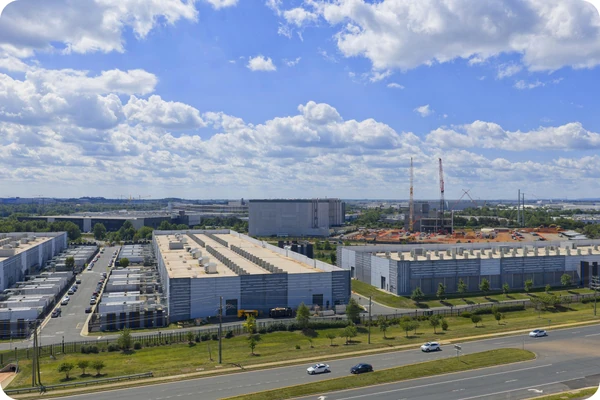
Why Stormwater Management Matters for Data Centers
Unlike many commercial properties, data centers operate with virtually zero tolerance for downtime.
Even localized flooding in parking lots, loading areas, electrical yards, or utility corridors can impact operations by restricting access, damaging infrastructure, or creating safety hazards.
Stormwater systems are designed to:
- Capture runoff from roofs and pavement
- Reduce localized flooding
- Control erosion
- Improve water quality before discharge
- Meet local and state stormwater regulations
- Protect surrounding waterways
These systems only perform as designed when they receive regular inspections and maintenance.
Stormwater Challenges Unique to Data Centers
Data centers often present stormwater conditions that differ from traditional office buildings or retail properties.
Large Impervious Surfaces
Data centers typically include:
- Large building footprints
- Extensive rooftops
- Equipment pads
- Access roads
- Parking areas
- Loading zones
These impervious surfaces prevent water from soaking into the ground, generating significant runoff during rain events.
Stormwater facilities must be capable of managing these runoff volumes while remaining free of sediment and debris.
Critical Electrical Infrastructure
Many data centers contain:
- Backup generators
- Electrical substations
- Fuel systems
- Cooling equipment
- Switchgear yards
Standing water near critical infrastructure increases operational risk and can complicate maintenance activities.
Keeping drainage systems functioning properly helps direct runoff away from these sensitive areas.
Security Restrictions
Data centers often have:
- Controlled access
- Perimeter fencing
- Secure utility areas
- Restricted personnel access
Stormwater contractors should be familiar with working within secure environments while coordinating with facility management to minimize disruptions.
Continuous Operations
Unlike facilities that can schedule maintenance around business hours, many data centers operate 24 hours a day, 365 days a year.
Stormwater inspections and maintenance should be planned to avoid interfering with operations while ensuring systems remain fully functional.
Common Stormwater Facilities at Data Centers
Depending on site design and local regulations, data centers may include several best management practices (BMPs).
Underground Detention Systems
Underground detention systems temporarily store stormwater before slowly releasing it into downstream systems.
Routine maintenance typically includes:
- Sediment removal
- Pipe cleaning
- Structural inspections
- Outlet inspections
- CCTV inspections when needed
Without maintenance, sediment accumulation reduces available storage capacity.
Stormwater Vaults
Stormwater vaults often collect sediment and debris before water leaves the property.
Over time they may require:
- Vacuum removal of accumulated sediment
- Debris removal
- Structural inspections
- Outlet cleaning
Neglecting maintenance can reduce treatment efficiency and increase blockage risks.
Bioretention Areas
Some campuses incorporate bioretention systems to improve water quality while reducing runoff.
Routine maintenance may include:
- Removing invasive vegetation
- Replacing mulch
- Removing sediment
- Maintaining healthy plant growth
- Restoring proper water flow
Healthy vegetation is essential for proper filtration and pollutant removal.
Sand Filters
Surface and underground sand filters help remove sediment and pollutants from stormwater runoff.
Over time they may require:
- Sediment removal
- Media replacement
- Surface cleaning
- Underdrain inspection
Failure to maintain filters reduces treatment performance and may contribute to standing water.
Oil-Water Separators and Hydrodynamic Devices
Vehicle traffic, maintenance operations, and generator fueling areas can contribute oils and other pollutants to stormwater runoff.
Pretreatment devices require periodic inspections and cleanouts to continue operating effectively.
Common Problems Found During Stormwater Inspections
Routine inspections frequently identify issues before they become expensive repairs.
Common findings include:
- Sediment accumulation
- Blocked outlet structures
- Standing water
- Excessive vegetation
- Erosion
- Pipe blockages
- Damaged riprap
- Sinkholes or settlement
- Trash and floatable debris
- Structural deterioration
Addressing these issues early typically costs far less than emergency repairs after a major storm.
Regulatory Compliance for Data Centers
Stormwater regulations vary by state and local jurisdiction, but commercial property owners are commonly responsible for maintaining stormwater facilities in accordance with approved plans and permit requirements.
Depending on location, facilities may be required to:
- Conduct periodic inspections
- Document maintenance activities
- Correct deficiencies
- Preserve treatment capacity
- Maintain records for regulatory review
Ignoring maintenance can lead to notices of violation, enforcement actions, or increased repair costs.
A documented maintenance program demonstrates that the owner is actively protecting the stormwater system.
Benefits of Preventive Stormwater Maintenance
Preventive maintenance supports both operational reliability and long-term asset management.
Benefits include:
Reduced Flooding Risk
Removing sediment and debris helps maintain designed storage capacity and drainage performance.
Protection of Critical Assets
Proper drainage reduces the potential for water accumulation around sensitive infrastructure.
Longer Facility Life
Routine maintenance helps extend the service life of stormwater infrastructure by identifying minor issues before they become major repairs.
Improved Regulatory Compliance
Scheduled inspections and documented maintenance help facilities meet ongoing compliance obligations.
Better Budget Planning
Preventive maintenance allows property owners to schedule repairs rather than responding to emergency failures.
Building a Stormwater Maintenance Plan for Data Centers
An effective maintenance program typically includes:
- Scheduled inspections
- Routine sediment removal
- Vegetation management
- Pipe and outlet cleaning
- Stormwater vault maintenance
- Structural repairs when necessary
- Documentation of completed work
- Follow-up inspections after major storm events
Facilities with multiple stormwater practices often benefit from annual maintenance planning that prioritizes high-risk assets while keeping systems operating efficiently year-round.
Partner with an Experienced Stormwater Contractor
Data centers demand reliability from every system on site – including stormwater infrastructure.
Working with a contractor experienced in commercial stormwater management helps ensure inspections, maintenance, and repairs are completed safely, efficiently, and in accordance with applicable requirements.
Whether maintaining underground detention systems, bioretention facilities, stormwater vaults, sand filters, or drainage infrastructure, proactive maintenance helps reduce risk, support compliance, and protect the long-term performance of one of your facility’s most important – but often overlooked – systems.
Protect Your Data Center’s Stormwater Infrastructure
If you manage a data center in Maryland, Northern Virginia, Washington, DC, or Delaware, iSTORMWATER provides professional stormwater inspections, maintenance, repairs, and rehabilitation services for commercial properties.
Our experienced team helps facility managers identify issues early, maintain compliance, and keep stormwater systems operating as designed – so you can stay focused on protecting critical operations.
Contact iSTORMWATER today to schedule an inspection or discuss a proactive maintenance plan for your data center.
📞 Call us at (410) 231-3455 or 💬 Contact us online.


Real Results
iStormwater LLC was an excellent choice. They made the process of the Stormwater pond repairs seamless. They took charge of the project and got the project approved and passing the inspection. We highly recommend them and would use them again.
Incredible stormwater management service. The owner John consulted on a property I manage and ended up saving us thousands of dollars in environmental fees from the government. Now, our property is compliant with the EPA and we have a great partner to keep us maintained on stormwater regulations over time.
So helpful with all of my water issues.
Great communication and leadership and a family friendly atmosphere. Thank you John!
Buying a commercial property means evaluating much more than the building, parking lot, roof, utilities, and financials. The property's stormwater management system can carry its...
- Annapolis
- Anne Arundel County
- Baltimore County
- Baltimore
- Bel Air South
- Bethesda
- Bowie
- Cecil County
- Charles County
- Columbia
- Gaithersburg
- Glen Burnie
- Howard County
- Montgomery County
- Pasadena
- Prince George’s County
- Rockville
- Severna Park
- St. Mary’s County