

Stormwater Riser Structures: Common Problems and Repair Needs
Stormwater ponds are designed to collect runoff and release it at controlled rates, but their performance depends on more than the size or condition of the pond itself. One of the most important components is the riser structure, which helps regulate how water exits the facility.
When a riser becomes clogged, deteriorates, or develops structural damage, the effects can extend throughout the stormwater management system. Water levels may rise unexpectedly, drainage patterns may change, and damage around the structure can create more serious concerns involving the pond’s embankment or outlet piping.
For commercial property owners, HOAs, and facility managers, understanding common stormwater riser problems can help identify maintenance and repair needs before they affect the facility’s performance or lead to compliance issues.
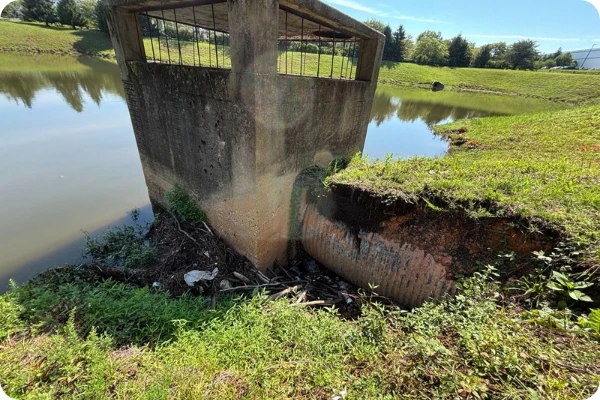
What Is a Stormwater Riser Structure?
A stormwater riser is a vertical outlet control structure commonly found in retention ponds, detention basins, and other stormwater management facilities. Its primary function is to regulate the release of stored runoff into a downstream drainage system.
Risers may be constructed from reinforced concrete, metal, or other materials, depending on the facility’s design. They are often connected to a horizontal outlet pipe, sometimes called the barrel or principal spillway pipe, which carries water away from the pond.
Depending on the design, a riser structure may incorporate several features:
-
Low-flow orifices: Small openings that regulate discharge during smaller storm events.
-
Weirs: Openings or notches that allow water to discharge when it reaches specified elevations.
-
Trash racks: Protective barriers intended to prevent larger debris from entering or obstructing outlet openings.
-
Pond drain valves: Components that allow controlled lowering of water levels for maintenance or other approved purposes.
-
Outlet piping: Pipes that convey water from the riser through or around the embankment to a downstream discharge point.
Not every riser includes all of these components. The configuration depends on the approved engineering design and the facility’s intended stormwater management functions.
A properly functioning riser helps maintain designated water elevations and release rates. When its openings or structural components are compromised, the pond may no longer discharge water as designed.
Common Problems Found in Stormwater Riser Structures
Riser structures are exposed to fluctuating water levels, sediment, debris, weather conditions, and repeated storm events. Over time, these conditions can contribute to several types of maintenance and repair needs.
1. Blocked Orifices and Outlet Openings
One of the most common riser maintenance issues is the accumulation of material around outlet openings.
Leaves, branches, floating trash, sediment, and vegetation can partially or completely obstruct the flow of water through a riser. Smaller low-flow orifices are particularly susceptible to blockage because their openings are designed to restrict discharge.
When an orifice becomes blocked, the pond may retain water longer than intended. In a dry detention basin, this can result in standing water well after a storm has passed. In other facilities, water may rise until it reaches a higher outlet opening.
Warning signs include:
-
Debris collected against the riser or trash rack
-
Sediment covering low-flow openings
-
Water levels remaining higher than expected
-
Unusual drainage behavior following rainfall
-
Water discharging through higher openings instead of the intended lower outlets
Removing accumulated material and restoring unobstructed flow may resolve the problem. However, recurring blockages can indicate that additional maintenance is needed elsewhere in the facility.
2. Cracking and Deterioration of Concrete Risers
Concrete riser structures can develop cracks, surface deterioration, and other defects over time.
Some cracking may be relatively minor, while other damage can indicate structural movement, deterioration, or conditions that threaten the structure’s integrity.
Common concerns include:
-
Vertical or horizontal cracks in concrete walls
-
Spalling, where sections of concrete break away from the surface
-
Exposed reinforcing steel
-
Deteriorated concrete around outlet openings
-
Displaced or separated concrete sections
-
Leaks through cracks or construction joints
Water entering cracks can contribute to further deterioration. Where reinforcing steel becomes exposed, corrosion may cause additional expansion and concrete damage.
Not every crack requires replacement of the riser. The appropriate repair depends on the crack’s location, severity, cause, and whether it affects watertightness or structural stability.
3. Corrosion of Metal Riser Structures
Metal risers and associated components may be vulnerable to corrosion, particularly when protective coatings have deteriorated or portions of the structure remain exposed to moisture and sediment.
Corrosion can affect structural walls, connections, fasteners, trash racks, and other metal components.
Potential problems include:
-
Rusting and deterioration of exposed metal
-
Loss of material thickness
-
Perforations that allow unintended water movement
-
Weakened connections and fasteners
-
Deteriorated mounting brackets or trash racks
Surface rust does not necessarily indicate a structural failure. However, extensive corrosion, perforations, or significant loss of metal thickness may require repair or replacement.
For older structures, an inspection may be needed to determine whether deterioration is localized or affects a larger portion of the system.
4. Leaking Joints and Riser-to-Barrel Connections
The connection between a riser and its outlet pipe is a particularly important inspection point.
These components are intended to convey water through a controlled discharge path. When joints separate or lose watertightness, water may escape into the surrounding soil instead.
Potential causes include settlement, movement of the structure, deterioration of joint materials, or damage to the pipe connection.
Signs of concern may include:
-
Visible separation at the riser-to-pipe connection
-
Water leaking through joints
-
Soil movement or voids around the structure
-
Unexplained wet areas near the embankment
-
Settlement or depressions along the outlet pipe alignment
Leaks are especially concerning when they affect piping that passes through an earthen embankment. Water moving through surrounding soil can carry soil particles away, creating internal erosion, sometimes called piping.
If left unresolved, internal erosion can compromise the embankment and potentially contribute to failure.
Because of these risks, suspected seepage around a riser or principal spillway pipe requires professional evaluation rather than a routine surface repair.
5. Damaged or Missing Trash Racks
Trash racks help prevent larger debris from entering riser openings and outlet piping. However, they can become bent, corroded, displaced, or clogged.
A damaged trash rack may allow debris to enter the outlet system, potentially creating a blockage that is more difficult to access and remove.
Conversely, a heavily obstructed trash rack can restrict flow even when the outlet openings behind it remain clear.
During inspections, maintenance professionals look for missing sections, damaged connections, significant corrosion, accumulated debris, and other conditions that interfere with the rack’s intended function.
Depending on the condition, repairs may involve clearing accumulated material, securing loose components, or replacing the rack in accordance with the approved design.
6. Settlement, Misalignment, and Structural Movement
Riser structures can also experience movement caused by changes in surrounding soil conditions, foundation problems, erosion, or settlement.
Movement may affect the structure itself or the connection between the riser and its outlet pipe.
Indicators can include:
-
A riser that appears tilted or displaced
-
Separation between connected components
-
Cracking associated with structural movement
-
Soil settlement around the riser
-
Misaligned outlet connections
These conditions warrant additional investigation because repairing visible cracks alone may not correct the underlying cause.
Where movement affects the foundation, embankment, or outlet piping, engineered corrective measures may be necessary.
7. Sediment Buildup Inside the Riser
Sediment accumulation is not limited to the pond bottom. Material can also collect inside a riser, particularly near low-flow openings or at the connection to outlet piping.
Over time, sediment can interfere with flow, reduce access to mechanical components, and conceal structural defects.
Sediment inside the structure may also be accompanied by debris, organic material, or deposits that make inspection more difficult.
Depending on the configuration and conditions, removal may require specialized equipment and controlled access.
The goal is not simply to remove visible sediment, but to restore the intended flow path while avoiding damage to the structure or its components.
How Riser Problems Affect Stormwater Pond Performance
The consequences of a damaged riser depend on the nature and severity of the deficiency.
A clogged orifice may prevent the pond from draining at the intended rate, while a leak or structural opening may allow water to bypass the designed outlet controls. Significant structural deterioration can create concerns about the integrity of the riser, outlet system, or surrounding embankment.
Potential effects include:
-
Extended detention times or unexpected standing water
-
Elevated pond water levels
-
Increased use of higher-stage outlets during storm events
-
Uncontrolled leakage or unintended discharge
-
Erosion or settlement near the riser and outlet pipe
-
Reduced effectiveness of the facility’s stormwater controls
-
Inspection deficiencies requiring corrective action
Importantly, the problem is not always obvious from the appearance of the pond.
A facility may appear to be draining normally even when leakage allows water to bypass its designed control openings. Conversely, standing water may result from a blocked riser rather than a problem with the pond’s overall storage capacity.
Identifying the actual cause is essential before selecting a repair method.
Stormwater Riser Repair Options
Not every riser deficiency requires a complete replacement. Some problems can be corrected through routine maintenance or localized repairs, while more extensive damage may require structural rehabilitation.
The appropriate approach should be based on the structure’s condition, the original design, and the results of a qualified assessment.
Debris Removal and Outlet Cleaning
For risers affected primarily by blockages, corrective maintenance may include removing accumulated vegetation, sediment, and debris from trash racks and outlet openings.
Cleaning should restore the original flow path without enlarging or otherwise altering the designed openings.
Concrete Repairs and Joint Sealing
Where deterioration is localized, repairs may involve removing unsound concrete, restoring damaged areas, or sealing cracks and joints using suitable materials and methods.
These repairs must account for the cause of deterioration. For example, sealing a crack without addressing continued structural movement or seepage may not provide a lasting solution.
Metal Component Repair or Replacement
Corroded metal components may require localized repair, protective treatment, or replacement, depending on the severity of damage and the material’s remaining condition.
Significantly deteriorated trash racks, fasteners, outlet controls, or structural sections may need replacement to restore their intended function.
Riser-to-Pipe Connection Repairs
When leakage or separation occurs at the riser-to-barrel connection, repairs may require excavation, joint rehabilitation, or replacement of damaged components.
Because these connections may be associated with an earthen embankment, the repair approach must account for watertightness, soil stability, and potential internal erosion.
Structural Rehabilitation or Replacement
A riser with extensive cracking, severe corrosion, significant displacement, or other major structural defects may require partial reconstruction or full replacement.
These projects can involve temporary water management, excavation, structural work, and restoration of disturbed areas.
Major repairs should be evaluated by a qualified engineer and coordinated with the appropriate jurisdiction when required.
Why Riser Repairs Must Follow the Approved Design
A riser is more than a drainage opening. Its dimensions and elevations are engineered to control how stormwater leaves the facility.
Changing the size of an orifice, raising or lowering a weir, or modifying an outlet configuration can change the rate and volume of water discharged at different water levels.
Even when a modification appears to improve drainage, it may interfere with the facility’s intended stormwater management performance.
For this reason, riser repairs should preserve or restore the approved configuration unless changes have been evaluated, designed, and authorized through the appropriate process.
This is particularly important for older facilities where original design drawings may not be readily available.
What to Expect During a Stormwater Riser Inspection
A thorough inspection evaluates the riser itself, its outlet controls, and the conditions that could affect its operation.
Depending on the structure’s configuration, accessibility, and observed deficiencies, an inspection may involve:
1. Reviewing available plans and maintenance records. Understanding the approved configuration helps determine whether the structure and its components remain consistent with the intended design.
2. Examining visible structural components. Inspectors look for cracking, corrosion, displacement, deterioration, and other signs of damage.
3. Checking outlet openings and trash racks. The inspection identifies obstructions, damaged protective components, and conditions that could interfere with controlled discharge.
4. Evaluating joints and connections. Particular attention is given to visible leakage, separation, and deterioration around the riser and outlet piping.
5. Observing surrounding conditions. Settlement, erosion, saturated soil, or unusual depressions near the structure may indicate problems that extend beyond the visible riser.
6. Documenting deficiencies and recommending corrective actions. Findings help determine whether cleaning, repair, additional investigation, or engineered rehabilitation is appropriate.
Some structures can be evaluated from accessible locations, while others require specialized inspection procedures. Entry into a riser or associated confined space should only be performed by properly trained and equipped personnel following applicable safety requirements.
When Does a Riser Problem Require Immediate Attention?
While routine debris removal can often be incorporated into scheduled maintenance, certain deficiencies warrant prompt professional assessment.
These include:
-
Significant leakage or suspected seepage: Especially around a riser-to-barrel connection or through an embankment.
-
Visible structural instability: Including substantial displacement, major cracking, or evidence of foundation movement.
-
Complete outlet obstruction: Particularly when water levels are rising or the facility cannot discharge as intended.
-
Sinkholes or settlement: Depressions near the riser or along an embankment outlet pipe may indicate subsurface soil loss.
-
Severe deterioration: Conditions that threaten the structural integrity or operation of the principal spillway.
These warning signs should not be treated as ordinary maintenance items. When embankment stability or dam safety may be involved, the facility owner should seek qualified engineering assistance and notify the appropriate authority as required.
Preventing Recurring Riser Structure Problems
Although riser structures experience wear over time, consistent maintenance can reduce the likelihood of avoidable failures.
A preventative maintenance program should include periodic inspection of the structure, clearing debris from outlet openings, maintaining access, and monitoring deterioration.
After major storms, it is particularly important to check whether trash racks or low-flow openings have become obstructed.
Maintenance records should also track recurring conditions. Repeated sediment accumulation, persistent leakage, or ongoing structural movement may indicate a problem that cannot be resolved through cleaning alone.
The inspection schedule should follow the facility’s approved operation and maintenance plan and applicable jurisdictional requirements, with additional assessments following significant storms or observed changes in performance.
Frequently Asked Questions About Stormwater Riser Structures
What is the difference between a riser and a stormwater outfall?
A riser is an outlet control structure that regulates how water leaves a stormwater facility. An outfall is the location where water is discharged from a pipe, channel, or other conveyance system into a downstream area or receiving water.
A riser may connect to piping that ultimately discharges through an outfall, but the two components perform different functions.
Can a clogged riser cause a detention pond to hold water?
Yes. If a low-flow opening is obstructed, stormwater may remain in the pond longer than intended. However, standing water can have multiple causes, so the outlet system should be evaluated before assuming the riser is responsible.
Does a cracked concrete riser need to be replaced?
Not necessarily. Some defects may be repairable, while extensive deterioration, structural movement, or compromised watertightness may require more substantial rehabilitation. The appropriate solution depends on the severity and underlying cause of the damage.
Can you enlarge a riser opening to make a pond drain faster?
Not without appropriate engineering evaluation and authorization. Outlet openings are sized to achieve specified discharge rates. Enlarging an opening can change the facility’s performance and may violate the approved stormwater design.
Who is responsible for repairing a stormwater riser?
Responsibility generally falls to the party identified in the facility’s maintenance agreement, approved plans, or applicable legal requirements. For privately maintained facilities, this may be a commercial property owner, HOA, or other designated entity.
Stormwater Riser Inspection and Repair Services
Riser structures play an important role in controlling stormwater discharge, and deficiencies can affect more than the structure itself.
From obstructed outlet openings and deteriorated trash racks to leaking joints and structural damage, identifying the cause of a problem is the first step toward restoring proper operation.
iSTORMWATER provides stormwater inspections, preventative maintenance, and repair services for commercial properties, HOAs, and other facility owners throughout Maryland, Washington, DC, and Northern Virginia.
Whether a riser requires routine cleaning, corrective maintenance, or additional evaluation for structural rehabilitation, our team can help identify deficiencies and determine appropriate next steps, including engineering coordination when necessary.
Concerned about the condition of your stormwater riser structure? Contact iSTORMWATER to discuss inspection findings, maintenance needs, or repair options for your stormwater facility.
📞 Call us at (410) 231-3455 or 💬 Contact us online.



Real Results
iStormwater LLC was an excellent choice. They made the process of the Stormwater pond repairs seamless. They took charge of the project and got the project approved and passing the inspection. We highly recommend them and would use them again.
Incredible stormwater management service. The owner John consulted on a property I manage and ended up saving us thousands of dollars in environmental fees from the government. Now, our property is compliant with the EPA and we have a great partner to keep us maintained on stormwater regulations over time.
So helpful with all of my water issues.
Great communication and leadership and a family friendly atmosphere. Thank you John!
Stormwater ponds are designed to collect runoff and release it at controlled rates, but their performance depends on more than the size or condition of...
- Annapolis
- Anne Arundel County
- Baltimore County
- Baltimore
- Bel Air South
- Bethesda
- Bowie
- Cecil County
- Charles County
- Columbia
- Gaithersburg
- Glen Burnie
- Howard County
- Montgomery County
- Pasadena
- Prince George’s County
- Rockville
- Severna Park
- St. Mary’s County