

Understanding Stormwater Maintenance Service Agreements
Stormwater systems require ongoing maintenance to function properly, meet regulatory requirements, and protect downstream waterways.
However, many commercial property owners and managers still rely on reactive maintenance – addressing issues only after a failed inspection, flooding event, or resident complaint.
A stormwater maintenance service agreement (MSA) provides a more proactive approach.
By establishing a structured schedule for inspections, maintenance, documentation, and repairs, an MSA helps ensure stormwater systems receive the attention they need throughout the year.
If you’re evaluating maintenance options for your property, understanding how these agreements work is the first step.
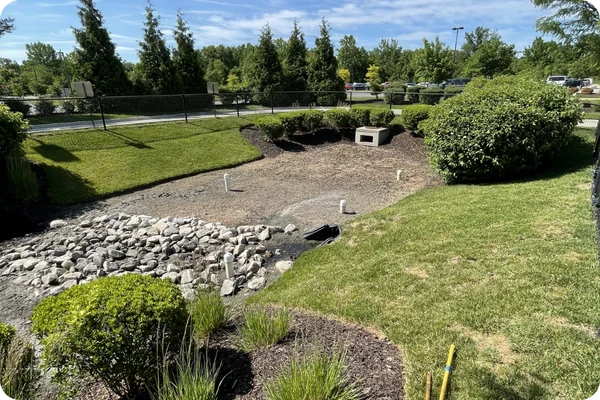
What Is a Stormwater Maintenance Service Agreement?
A stormwater maintenance service agreement is a formal partnership between a property owner and a qualified stormwater contractor that outlines how stormwater infrastructure will be inspected, maintained, documented, and managed over time.
Unlike one-time service calls, an MSA establishes recurring maintenance activities based on the specific needs of the property and the types of stormwater facilities on-site.
The agreement typically defines:
- Covered stormwater assets
- Inspection frequency
- Routine maintenance tasks
- Reporting requirements
- Recommended repair processes
- Roles and responsibilities
- Service schedules and response expectations
The goal is to keep stormwater systems operating as designed while supporting ongoing compliance with local requirements.
Why Stormwater Systems Need Ongoing Maintenance
Stormwater facilities are designed to capture, convey, filter, detain, or infiltrate runoff.
Over time, these systems naturally accumulate sediment, debris, pollutants, and vegetation growth that can reduce performance.
Without regular maintenance, property owners may experience:
- Reduced treatment efficiency
- Clogged inlets and outlets
- Standing water
- Erosion and scour
- Excessive vegetation growth
- Structural deterioration
- Increased flooding risk
- Compliance concerns
Routine inspections and maintenance help identify issues before they affect system performance.
The U.S. Environmental Protection Agency recommends regular operation and maintenance activities because stormwater best management practices require ongoing upkeep to continue functioning as intended.
What Services Are Typically Included in an MSA?
Every property has unique stormwater assets and maintenance requirements, but most agreements include a combination of inspection, maintenance, reporting, and repair services.
Common services include:
- Scheduled inspections
- Sediment and debris removal
- Vegetation management
- Inlet and outlet cleaning
- Catch basin maintenance
- Hydrodynamic separator cleaning
- Stormwater vault maintenance
- Sand filter maintenance
- Minor repairs
- Photo documentation
- Maintenance reporting
- Regulatory support
Some providers also offer emergency response services and priority scheduling for customers with active agreements.
Which Stormwater Facilities Can Be Covered?
Maintenance service agreements can be tailored to virtually any stormwater best management practice (BMP), including:
- Detention ponds
- Retention ponds
- Bioretention facilities
- Sand filters
- Hydrodynamic separators
- Stormwater vaults
- Manufactured treatment devices
- Catch basins and inlets
- Permeable pavement systems
- Constructed wetlands
- Tree box filters
- Stormwater conveyance systems
A comprehensive agreement should account for both aboveground and belowground infrastructure.
How Is an MSA Different From One-Time Maintenance?
One-time maintenance is typically performed in response to a specific issue or inspection finding.
Maintenance service agreements take a proactive approach by establishing recurring inspections and maintenance activities before problems develop.
With one-time maintenance, property owners are responsible for tracking inspection schedules, coordinating vendors, maintaining records, and identifying potential issues.
An MSA centralizes these responsibilities through a single, coordinated program.
This approach can improve consistency, simplify documentation, and help ensure maintenance activities are not overlooked.
Who Benefits Most From a Maintenance Service Agreement?
Maintenance service agreements are especially beneficial for:
- Commercial property owners
- Property management companies
- HOAs and COAs
- Industrial facilities
- Retail centers
- Office parks
- Healthcare campuses
- Educational institutions
- Government facilities
- Multi-site property portfolios
Properties with multiple stormwater systems or complex regulatory requirements often benefit the most from a structured maintenance program.
What Should You Look for in an MSA?
Not all maintenance agreements provide the same level of service. When evaluating providers, consider whether the agreement includes:
- Clear scopes of work
- Defined inspection frequencies
- Detailed reporting
- Photo documentation
- Regulatory knowledge
- Qualified stormwater personnel
- Repair capabilities
- Experience with multiple BMP types
- Flexible service options
A strong agreement should be customized to your property’s infrastructure rather than relying on a one-size-fits-all approach.
Common Questions About Maintenance Service Agreements
How often are stormwater systems inspected?
Inspection frequency depends on local regulations, permit requirements, facility type, and site conditions.
Some systems may require quarterly inspections, while others may be inspected annually or after major storm events.
Does an MSA cover major repairs?
Most agreements include routine maintenance and minor repairs. Major rehabilitation work is typically quoted separately unless specifically included in the contract.
Are maintenance records provided?
Yes. Most providers supply inspection reports, maintenance logs, photographs, and recommendations to support compliance and recordkeeping.
Can an MSA be customized?
Absolutely. Effective agreements are tailored to the property’s specific stormwater assets, maintenance needs, and regulatory requirements.
A Proactive Approach to Stormwater Management
Stormwater infrastructure performs best when maintenance is consistent, documented, and tailored to the needs of the site.
A maintenance service agreement provides a framework for managing these systems more effectively by establishing clear expectations, recurring service schedules, and ongoing oversight.
Whether your property includes ponds, vaults, filters, or manufactured treatment devices, an MSA can help simplify maintenance responsibilities and support long-term system performance.
📞 Call us at (410) 231-3455 or 💬 Contact us online.


Real Results
iStormwater LLC was an excellent choice. They made the process of the Stormwater pond repairs seamless. They took charge of the project and got the project approved and passing the inspection. We highly recommend them and would use them again.
Incredible stormwater management service. The owner John consulted on a property I manage and ended up saving us thousands of dollars in environmental fees from the government. Now, our property is compliant with the EPA and we have a great partner to keep us maintained on stormwater regulations over time.
So helpful with all of my water issues.
Great communication and leadership and a family friendly atmosphere. Thank you John!
Belowground stormwater treatment systems do a significant amount of work out of sight. While the surface of a property may appear clean and well-maintained, underground...
- Annapolis
- Anne Arundel County
- Baltimore County
- Baltimore
- Bel Air South
- Bethesda
- Bowie
- Cecil County
- Charles County
- Columbia
- Gaithersburg
- Glen Burnie
- Howard County
- Montgomery County
- Pasadena
- Prince George’s County
- Rockville
- Severna Park
- St. Mary’s County