

How Pretreatment Improves Stormwater System Performance
Stormwater management systems are designed to collect, convey, and treat runoff before it reaches downstream waterways. But many stormwater BMPs perform better when runoff is managed before it reaches the primary treatment area.
That’s where stormwater pretreatment comes in.
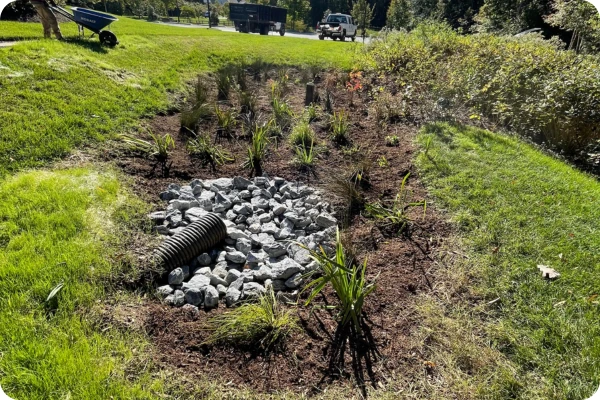
Pretreatment uses a separate feature, structure, or device to capture sediment, trash, debris, and other pollutants before they reach a downstream stormwater BMP. By removing some of the larger or heavier materials early in the flow path, pretreatment can help reduce the maintenance burden on downstream systems and protect components that are more sensitive to sediment and debris.
Common pretreatment features include sediment forebays, deep-sump catch basins, hydrodynamic separators, inlet structures, filter inserts, and vegetated filter areas.
But pretreatment is not a set-it-and-forget-it component. Because these systems are designed to collect material, they eventually need to be inspected and maintained. If accumulated sediment and debris are allowed to build up, the pretreatment device can lose capacity and may begin affecting the performance of the larger stormwater system.
What Is Stormwater Pretreatment?
Stormwater pretreatment is the process of removing certain pollutants from runoff before the water reaches a primary stormwater treatment or infiltration practice.
The purpose isn’t necessarily to provide complete stormwater treatment. Instead, pretreatment typically targets larger particles, sediment, trash, debris, and other materials that could accumulate in or interfere with a downstream BMP.
For example, runoff entering a stormwater pond may first pass through a sediment forebay. The forebay slows the incoming water, allowing heavier sediment to settle before the water continues into the main pond.
This creates a simple but important principle:
Capture the material that is easiest to remove before it reaches the part of the system that is harder to maintain.
Pretreatment is particularly valuable when the downstream BMP relies on filtration, infiltration, specific flow paths, or other components that can be affected by excessive sediment accumulation.
Why Is Pretreatment Important?
Stormwater runoff can pick up a variety of materials as it travels across parking lots, roads, rooftops, landscaped areas, and other developed surfaces.
Depending on the property, runoff may carry:
- Sediment and soil particles
- Leaves and organic debris
- Trash and floatable materials
- Gravel and coarse particles
- Oil and grease
- Pollutants attached to sediment
Without pretreatment, some of this material can travel farther into the stormwater system and accumulate in areas that are more difficult or expensive to maintain.
1. Pretreatment Reduces Sediment Loading
Sediment is one of the most common maintenance concerns in stormwater systems.
As sediment accumulates, it can reduce available storage or treatment capacity and interfere with intended flow paths. In filtration and infiltration systems, excessive sediment can also contribute to surface clogging and reduced infiltration.
Pretreatment doesn’t eliminate sediment accumulation. Instead, it concentrates some of that accumulation in a location designed to be maintained.
A sediment forebay, for example, can collect coarse sediment near the entrance to a pond or wetland. That material can then be removed without requiring the same level of disturbance to the larger treatment area.
This can make sediment management more targeted and predictable.
2. Pretreatment Helps Protect Downstream BMPs
Different stormwater BMPs depend on different treatment mechanisms.
Bioretention systems rely on engineered media and infiltration. Filters rely on treatment media. Underground systems depend on maintaining adequate storage and unobstructed flow paths. Ponds and wetlands require available treatment and storage volume.
Excess sediment and debris can interfere with these functions.
Depending on the BMP, sediment can:
- Reduce available treatment volume
- Clog filter media
- Restrict infiltration
- Accumulate around inlets and outlets
- Obstruct flow paths
- Increase downstream maintenance needs
- Contribute to premature deterioration of certain components
By capturing some of that material upstream, pretreatment helps protect the components doing the primary treatment.
3. Pretreatment Can Make Maintenance More Manageable
One of the biggest practical advantages of pretreatment is that it can make maintenance more targeted.
Removing sediment from a small forebay or catch basin is generally more straightforward than removing sediment that has spread throughout a larger pond, wetland, or treatment system.
The goal isn’t to eliminate maintenance.
The goal is to make maintenance happen in the right place.
That can help property owners address routine accumulation before it becomes a larger downstream problem.
Common Stormwater Pretreatment Devices
Pretreatment can take many forms. The appropriate approach depends on the site’s drainage area, pollutant loading, available space, hydraulic conditions, and the downstream BMP.
Sediment Forebays
A sediment forebay is a designated area near the inlet of a larger stormwater facility where incoming runoff slows down and heavier particles can settle.
Forebays are commonly used with:
- Stormwater ponds
- Wetlands
- Larger treatment systems
The basic process is straightforward:
Runoff enters → flow slows → coarse sediment settles → runoff continues downstream.
Because sediment accumulates in the forebay, the area needs to remain accessible for inspection and sediment removal.
A well-maintained forebay can help reduce the amount of coarse sediment reaching the primary treatment area.
Deep-Sump Catch Basins
Catch basins can provide pretreatment by providing a sump below the outlet where sediment and debris can settle.
The sump creates additional space for heavier material to collect before runoff continues through the drainage system.
Depending on the design, catch basins may also incorporate:
- Trash screens
- Hooded outlets
- Filter inserts
- Oil-absorbing media
- Other inlet controls
Catch basins are common throughout commercial stormwater systems, but their pretreatment capacity is limited. Once the sump fills with sediment and debris, there is less available space to capture additional material.
That makes routine inspection and cleaning particularly important.
Hydrodynamic Separators
Hydrodynamic separators are engineered stormwater treatment devices that use the movement of runoff to separate sediment and other materials from the water.
Depending on the specific design, these systems can capture:
- Sediment
- Floatable debris
- Trash
- Other particulate-associated pollutants
Many hydrodynamic separators are installed underground and accessed through manholes or access structures.
Because the treatment components are below grade, accumulation may not be obvious from the surface. Inspection and maintenance are therefore especially important.
Inlet Structures and Inserts
Some systems use inlet controls or catch basin inserts to capture sediment, trash, or other pollutants before runoff enters downstream infrastructure.
These can be useful where space is limited or where a specific pollutant needs to be addressed close to the source.
However, inserts and inlet controls can also become clogged or overloaded.
A device that is full of sediment or covered with debris may no longer provide the intended level of pretreatment and could begin restricting flow.
Vegetated Filter Areas
Vegetated areas can also provide pretreatment by slowing runoff and encouraging sediment deposition before water reaches another BMP.
Examples include:
- Vegetated filter strips
- Grass channels
- Vegetated swales
- Other designed vegetated pretreatment areas
These features still require maintenance. Sediment accumulation, erosion, excessive vegetation, or altered flow paths can change how runoff moves through the system.
How Pretreatment Supports Different Stormwater BMPs
Pretreatment is particularly valuable when the downstream BMP contains components that can be affected by sediment or debris.
Bioretention
Bioretention systems use engineered soil or treatment media to filter and infiltrate stormwater.
If excessive sediment accumulates on the surface, it can reduce infiltration and contribute to clogging.
Pretreatment can intercept some of that sediment before it reaches the bioretention area, helping protect the treatment media and preserve the intended flow path.
This is one reason sediment control and pretreatment are important considerations when designing and maintaining bioretention systems.
Stormwater Wetlands
Stormwater wetlands can benefit from pretreatment features such as sediment forebays.
Capturing coarse sediment before runoff reaches the main wetland area can help preserve the treatment area and concentrate sediment accumulation where it can be more readily accessed for maintenance.
Stormwater Ponds
Ponds can also benefit from upstream pretreatment.
A forebay or similar feature can capture sediment near the inflow rather than allowing it to distribute throughout the pond.
Over time, this can make sediment management more targeted and help preserve the available capacity of the main pond.
Pretreatment does not eliminate the need for pond inspections, vegetation management, sediment monitoring, or other pond maintenance. It is one component of the overall maintenance strategy.
Underground Stormwater Systems
Underground detention and treatment systems can be particularly sensitive to sediment and debris because much of the infrastructure is below grade.
Pretreatment may be provided through:
- Catch basins
- Manholes
- Hydrodynamic separators
- Proprietary treatment units
- Other upstream structures
Keeping these components maintained can reduce the amount of sediment and debris entering the downstream system.
This is particularly important because problems inside underground systems can be difficult to identify without appropriate inspection access.
Pretreatment Does Not Replace Primary Treatment
Pretreatment should not be confused with the primary treatment function of a stormwater BMP.
A pretreatment device is typically designed to perform a specific upstream function, such as:
- Capturing coarse sediment
- Removing trash and debris
- Separating floatable materials
- Reducing sediment loading
- Protecting filtration or infiltration media
- Providing an accessible location for sediment accumulation
It isn’t necessarily designed to provide complete pollutant removal.
For example, a sediment forebay can remove a significant amount of coarse sediment before runoff enters a wetland or pond, but the downstream facility still performs its own treatment functions.
The most effective way to think about stormwater pretreatment is as part of a treatment train.
Each component performs a different role:
Pretreatment → Primary treatment → Flow control → Discharge
Looking at the system this way helps property owners understand why a problem in one component can eventually affect another.
Why Pretreatment Devices Need Regular Inspections
Pretreatment works by collecting material.
That means finding sediment or debris in a pretreatment device isn’t necessarily evidence that the device is failing. In many cases, the accumulation shows that the device is doing what it was designed to do.
The problem begins when the accumulated material is allowed to remain in place too long.
During a stormwater inspection, pretreatment features should be evaluated for conditions such as:
- Sediment accumulation
- Excessive trash or debris
- Blocked or restricted inlets
- Blocked outlets
- Erosion
- Structural damage
- Clogging
- Unexpected standing water
- Vegetation problems
- Changes to the intended flow path
- Evidence of bypassing
Inspection should also consider what is happening downstream.
For example, a catch basin that repeatedly fills with sediment may indicate an upstream erosion problem or unusually high sediment loading.
Likewise, if a downstream filtration or infiltration BMP shows signs of clogging despite having a pretreatment device, the system may need a closer evaluation.
The issue could involve:
- An overloaded pretreatment device
- Inadequate maintenance
- A damaged component
- Bypassing
- An upstream sediment source
- A design or capacity issue
Looking at the entire flow path can help identify the cause instead of simply addressing the symptom.
Maintenance Is What Keeps Pretreatment Effective
A pretreatment device cannot collect sediment and debris indefinitely.
Eventually, accumulated material needs to be removed.
Maintenance requirements vary based on the type of device, drainage area, pollutant loading, design, site conditions, and manufacturer or regulatory requirements. There is no universal maintenance schedule that applies to every pretreatment system.
Common maintenance activities include:
Sediment Removal
Sediment is one of the most common reasons pretreatment devices require service.
Depending on the structure, accumulated sediment may be removed using:
- Vacuum equipment
- A vacuum truck
- Excavation equipment
- Manual removal
- Other equipment appropriate for the facility
For underground structures, vacuum equipment can often provide an efficient way to remove accumulated material without excavation.
Trash and Debris Removal
Leaves, branches, litter, and other debris can obstruct inlets, outlets, screens, and flow paths.
Removing this material helps maintain hydraulic function and reduces the risk of blockage.
Inlet and Outlet Inspection
A pretreatment device cannot function properly if runoff is bypassing it or if its outlet is blocked.
Inspections should evaluate whether water is entering, moving through, and exiting the structure as intended.
Monitoring Accumulation
Maintenance records can provide useful information about how quickly a pretreatment device is accumulating material.
Tracking findings over multiple inspections can help property managers identify patterns and make better decisions about future cleaning.
For example, if a catch basin consistently reaches a high sediment level between annual inspections, it may need more frequent maintenance.
Pretreatment Should Be Part of the Inspection – Not an Afterthought
When inspecting a stormwater system, it can be tempting to focus on the most visible or recognizable BMP.
A large detention pond, bioretention area, or underground vault may attract the most attention.
But smaller upstream structures can have a major influence on what reaches those systems.
A property may have a large stormwater BMP that appears to be functioning properly while an upstream catch basin or separator is nearly full of sediment.
Eventually, that condition can affect the downstream system.
A comprehensive stormwater inspection should therefore consider the entire flow path:
Drainage area → Inlet → Pretreatment → Primary BMP → Outlet → Downstream discharge
This approach helps identify problems before they move farther through the system.
What Happens When Pretreatment Is Neglected?
When pretreatment isn’t inspected or maintained, accumulated material can begin affecting the rest of the stormwater system.
Potential consequences include:
- Reduced sediment storage capacity
- Clogged inlets or outlets
- Increased sediment loading downstream
- Reduced infiltration
- Clogged treatment media
- Reduced available treatment volume
- More difficult maintenance
- Increased risk of erosion or bypass
- More extensive downstream repairs
In some cases, the first noticeable symptom may appear downstream from the actual problem.
For example, a property manager might notice ponding in a bioretention area without realizing that an upstream structure has become clogged or overloaded.
This is why stormwater inspections should evaluate how individual components work together rather than treating each structure as an isolated asset.
Can Pretreatment Help Protect the Long-Term Performance of a Stormwater System?
Pretreatment can contribute to long-term system performance by reducing the amount of coarse sediment and debris reaching downstream components.
But pretreatment doesn’t guarantee that a stormwater facility will last longer or avoid major maintenance.
Its effectiveness depends on factors such as:
- Proper design
- Appropriate sizing
- Site conditions
- Pollutant loading
- Hydraulic conditions
- Regular inspection
- Timely maintenance
A well-maintained pretreatment system can help concentrate certain maintenance needs in accessible areas and reduce the amount of material reaching more sensitive downstream components.
That can make the overall system easier to manage and may reduce the frequency or severity of some downstream maintenance needs.
Pretreatment Is Part of a Larger Stormwater Maintenance Strategy
Stormwater systems perform best when their components are managed as a connected system.
Pretreatment is one part of that strategy.
Regular inspections can identify accumulation and developing problems. Preventative maintenance can address those conditions before they affect downstream BMPs. More extensive maintenance or repairs can then be scheduled when inspection findings indicate they are necessary.
For commercial property owners and managers, this creates a more proactive approach:
Inspect → Identify accumulation → Maintain pretreatment → Protect downstream BMPs → Monitor system performance
This approach can also make stormwater maintenance easier to budget and plan.
Rather than waiting for a downstream BMP to show obvious signs of impairment, property managers can monitor upstream pretreatment structures and address sediment and debris accumulation as part of routine stormwater maintenance.
Final Takeaway
Pretreatment may be one of the smaller components in a stormwater management system, but its role can be significant.
By capturing sediment, trash, debris, and other materials before they reach downstream treatment areas, pretreatment can help protect filtration and infiltration media, preserve treatment capacity, reduce maintenance burdens, and make stormwater systems easier to manage.
Common pretreatment features include sediment forebays, deep-sump catch basins, hydrodynamic separators, inlet controls, and vegetated filter areas.
But installing a pretreatment device is only the beginning. Because these systems are designed to collect pollutants, they require regular inspection and maintenance to remain effective.
For property owners and managers, the important question isn’t simply:
“Does this property have pretreatment?”
It’s:
“Is the pretreatment being inspected and maintained before accumulated material becomes a problem for the rest of the stormwater system?”
A proactive inspection and maintenance program can help identify those issues early, protect downstream BMPs, and keep the entire stormwater system performing as intended.
📞 Call us at (410) 231-3455 or 💬 Contact us online.



Real Results
iStormwater LLC was an excellent choice. They made the process of the Stormwater pond repairs seamless. They took charge of the project and got the project approved and passing the inspection. We highly recommend them and would use them again.
Incredible stormwater management service. The owner John consulted on a property I manage and ended up saving us thousands of dollars in environmental fees from the government. Now, our property is compliant with the EPA and we have a great partner to keep us maintained on stormwater regulations over time.
So helpful with all of my water issues.
Great communication and leadership and a family friendly atmosphere. Thank you John!
Buying a commercial property means evaluating much more than the building, parking lot, roof, utilities, and financials. The property's stormwater management system can carry its...
- Annapolis
- Anne Arundel County
- Baltimore County
- Baltimore
- Bel Air South
- Bethesda
- Bowie
- Cecil County
- Charles County
- Columbia
- Gaithersburg
- Glen Burnie
- Howard County
- Montgomery County
- Pasadena
- Prince George’s County
- Rockville
- Severna Park
- St. Mary’s County