

Stormwater Pond Dredging: When Sediment Removal Becomes Necessary
Stormwater ponds are designed to collect and manage runoff while capturing sediment, debris, and pollutants before they reach downstream waterways. Over time, however, the very process that makes these systems effective can also reduce their performance.
As sediment accumulates within a stormwater pond, storage capacity decreases, water quality can decline, and the system may no longer function as originally designed. Eventually, dredging may become necessary to restore the pond’s capacity and long-term effectiveness.
Understanding how sediment accumulates, recognizing the signs of excessive buildup, and planning for dredging before performance issues develop can help property owners avoid costly repairs, flooding concerns, and regulatory compliance issues.
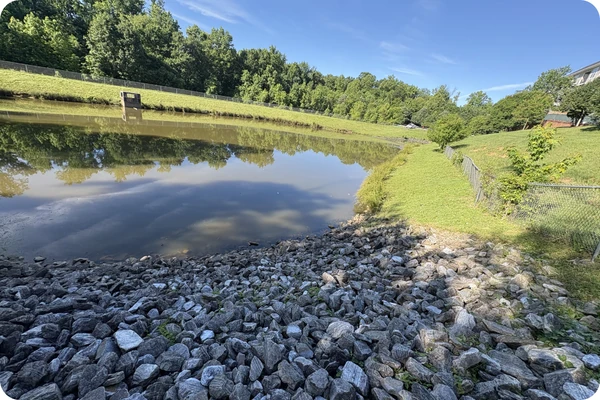
Why Sediment Accumulates in Stormwater Ponds
Stormwater ponds are intended to slow runoff and allow suspended particles to settle out of the water column. Every rainfall event carries some amount of sediment into the system.
Common sediment sources include:
- Construction site runoff
- Bare soil and eroding slopes
- Landscape bed erosion
- Parking lot debris
- Roadway grit and sand
- Organic material such as leaves and vegetation
As runoff enters the pond, these materials settle to the bottom. While this process improves downstream water quality, it gradually fills the pond with accumulated sediment.
In many cases, sediment buildup occurs so slowly that property owners do not notice the problem until significant capacity has already been lost.
What Happens When Sediment Builds Up?
A stormwater pond functions based on available storage volume. As sediment accumulates, that storage volume decreases.
Excessive sediment accumulation can result in:
Reduced Stormwater Storage Capacity
One of the primary purposes of a stormwater pond is to temporarily store runoff during storm events. When sediment occupies space that was originally designed for water storage, the pond’s ability to manage runoff diminishes.
Reduced storage capacity may increase the risk of:
- Localized flooding
- Overtopping during major storm events
- Increased downstream discharge rates
- Erosion of adjacent infrastructure
Declining Water Quality Performance
Stormwater ponds are designed to remove pollutants through settling and treatment processes. As sediment accumulates, water flow patterns can change, reducing treatment effectiveness.
A pond that has lost significant capacity may no longer achieve its intended pollutant removal goals.
Increased Vegetation and Algae Growth
As ponds become shallower, sunlight penetrates more of the water column. This can encourage excessive aquatic vegetation and algae growth.
Property managers may notice:
- Algae blooms
- Dense vegetation
- Odors
- Poor aesthetics
- Mosquito concerns
While these issues are often treated as vegetation problems, excessive sediment accumulation may be a contributing factor.
Structural and Operational Issues
Sediment often accumulates around inlet structures, outlet structures, and forebays before affecting the entire pond.
Over time, buildup can:
- Restrict flow paths
- Block inlet structures
- Reduce forebay effectiveness
- Increase maintenance requirements
- Accelerate wear on stormwater infrastructure
How Do You Know When a Stormwater Pond Needs Dredging?
There is no universal dredging schedule because sediment accumulation rates vary significantly from one site to another.
Factors that influence accumulation include:
- Watershed size
- Upstream land use
- Construction activity
- Erosion conditions
- Storm frequency and intensity
- Existing maintenance practices
Instead of relying solely on age, property owners should monitor the pond’s condition through inspections and periodic assessments.
Common indicators that dredging may be necessary include:
Visible Sediment Deposits
Sediment bars or shallow areas may become visible near inlet locations or throughout the pond basin.
Reduced Pond Depth
If portions of the pond appear significantly shallower than originally designed, accumulated sediment may be reducing storage volume.
Frequent Flooding or Poor Drainage
A pond that once managed storm events effectively but now struggles to recover may have lost capacity.
Excessive Vegetation Growth
Shallow water conditions often support unwanted vegetation that was not previously present.
Forebay Filled with Sediment
Many stormwater ponds include a forebay specifically designed to capture sediment before it reaches the main basin. When the forebay becomes filled, maintenance or dredging is often necessary.
Assessing Sediment Accumulation
Before a dredging project is planned, the amount of accumulated sediment should be quantified.
Professional evaluations may include:
Bathymetric Surveys
Bathymetric surveys measure existing pond depths and compare them to original design elevations.
These surveys help determine:
- Sediment depth
- Remaining storage volume
- Areas requiring excavation
- Estimated dredging quantities
Sediment Probing
Sediment probing can help identify the boundary between accumulated sediment and the original pond bottom.
Engineering Evaluation
An engineering review may be necessary to determine whether the pond still meets design requirements and regulatory expectations.
Accurate data helps property owners avoid unnecessary dredging while ensuring maintenance is performed before system performance is significantly impacted.
Stormwater Pond Dredging Methods
The appropriate dredging approach depends on site conditions, sediment volume, access constraints, and project goals.
Mechanical Dredging
Mechanical dredging typically involves excavators, long-reach equipment, or earthmoving machinery removing sediment from the pond.
This method is commonly used when:
- The pond can be partially or fully dewatered
- Large volumes of sediment must be removed
- Good equipment access is available
Hydraulic Dredging
Hydraulic dredging uses specialized equipment to pump sediment as a slurry to a designated dewatering area.
This method may be appropriate when:
- Maintaining water levels is desirable
- Access is limited
- Environmental impacts must be minimized
Each project should be evaluated individually to determine the most effective and cost-efficient approach.
What Happens to the Removed Sediment?
Sediment removed from a stormwater pond cannot always be disposed of immediately.
Depending on site conditions, sediment may require:
- Dewatering
- Testing
- Transportation
- Approved disposal or reuse
Sediment that contains elevated contaminant concentrations may require special handling procedures.
Proper planning is essential to avoid delays and unexpected project costs.
Can Dredging Be Delayed Through Better Maintenance?
While dredging is eventually necessary for many stormwater ponds, proactive maintenance can significantly extend the time between dredging projects.
Recommended practices include:
- Regular inspections
- Forebay cleanouts
- Erosion control repairs
- Sediment source reduction
- Vegetation management
- Inlet and outlet maintenance
Addressing sediment at its source often reduces accumulation rates and helps preserve pond capacity for a longer period.
Planning for Long-Term Pond Performance
Stormwater pond dredging is not a sign of failure. It is a normal part of the lifecycle of many stormwater management systems.
Because stormwater ponds are designed to capture sediment, accumulation is expected over time. The key is identifying when sediment buildup begins affecting storage capacity, water quality treatment, and overall system performance.
Routine inspections, sediment assessments, and proactive maintenance planning can help property owners identify dredging needs before they become costly problems. When performed at the right time, dredging restores pond capacity, improves functionality, and helps ensure the system continues protecting both property and water quality for years to come.
📞 Call us at (410) 231-3455 or 💬 Contact us online.



Real Results
iStormwater LLC was an excellent choice. They made the process of the Stormwater pond repairs seamless. They took charge of the project and got the project approved and passing the inspection. We highly recommend them and would use them again.
Incredible stormwater management service. The owner John consulted on a property I manage and ended up saving us thousands of dollars in environmental fees from the government. Now, our property is compliant with the EPA and we have a great partner to keep us maintained on stormwater regulations over time.
So helpful with all of my water issues.
Great communication and leadership and a family friendly atmosphere. Thank you John!
Stormwater facilities are built to manage runoff, reduce flooding, improve water quality, and help properties comply with local regulations. But installation is only the beginning....
- Annapolis
- Anne Arundel County
- Baltimore County
- Baltimore
- Bel Air South
- Bethesda
- Bowie
- Cecil County
- Charles County
- Columbia
- Gaithersburg
- Glen Burnie
- Howard County
- Montgomery County
- Pasadena
- Prince George’s County
- Rockville
- Severna Park
- St. Mary’s County