

How to Read a Stormwater Inspection Report
Stormwater inspection reports are a critical part of maintaining compliance and protecting your property – but for many property managers and owners, they can feel overly technical or difficult to interpret.
Understanding how to read a stormwater inspection report isn’t just about checking a box. It’s about knowing what issues matter, what can wait, and what requires immediate action to avoid regulatory risk, property damage, or costly repairs.
This guide breaks down how to interpret your inspection report so you can make informed decisions with confidence.
Why Stormwater Inspection Reports Matter
Inspection reports serve as documented proof that your stormwater system is being evaluated and maintained in accordance with local and state regulations in Maryland, DC, Northern Virginia, and Delaware.
They are also:
- A record of system condition over time
- A tool for identifying small issues before they become major failures
- A key component of compliance during audits or enforcement actions
Ignoring or misunderstanding what’s in your report can lead to missed maintenance, system failure, or even fines.
Key Sections of a Stormwater Inspection Report
While formats vary slightly, most professional inspection reports include the same core components. Knowing how to navigate these sections helps you quickly assess the health of your system.
1. System Overview
This section identifies the stormwater practices on your property – such as bioretention facilities, detention ponds, underground systems, or proprietary BMPs.
What to look for:
- Confirmation that all known structures were inspected
- Any notes about inaccessible or missing components
If something is listed as “not observed” or “not accessible,” it may require follow-up to ensure full compliance.
2. Condition Ratings or Observations
Inspectors typically assign condition ratings (e.g., good, fair, poor) or provide written observations for each structure.
How to interpret this:
- Good: Functioning as intended, no immediate action needed
- Fair: Minor issues present; maintenance recommended
- Poor: Performance is compromised; corrective action likely needed
Pay attention to patterns – multiple “fair” ratings across a property can indicate broader maintenance gaps.
3. Deficiencies and Problem Areas
This is one of the most important sections of the report. It outlines specific issues impacting system performance.
Common examples include:
- Sediment buildup reducing storage capacity
- Clogged inlets or outlet structures
- Erosion near pipes or channels
- Vegetation overgrowth or bare areas
Rather than focusing on the terminology, focus on impact:
- Is flow being restricted?
- Is structural integrity compromised?
- Could this worsen quickly if left unaddressed?
4. Photo Documentation
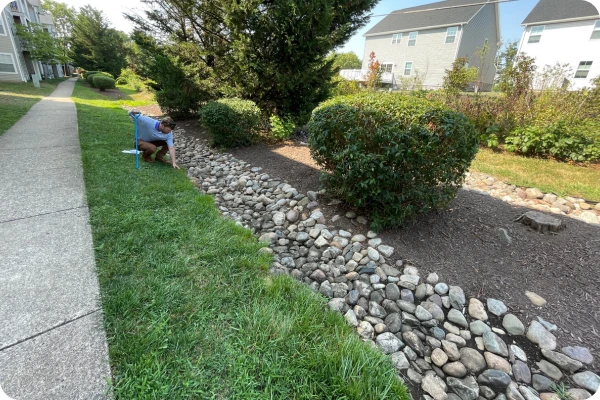
Most inspection reports include photos to support findings. These visuals are essential for understanding the severity of issues.
How to use photos effectively:
- Compare current images to past reports (if available)
- Look for progression – has erosion worsened? Has sediment increased?
- Identify areas that may not be obvious from written notes alone
Photos can also help prioritize work when budgeting for maintenance.
5. Recommended Actions
Inspectors will typically include recommendations ranging from routine maintenance to more involved repairs.
These may include:
- Sediment removal
- Vegetation management
- Structural repairs
- System rehabilitation
Important: Not all recommendations carry the same urgency. Some are preventative, while others are critical for compliance or functionality.
6. Compliance Notes
In regulated regions like Maryland and surrounding jurisdictions, inspection reports often include compliance-related language.
This may reference:
- Required maintenance timelines
- Whether the system meets current standards
- Items that must be addressed to remain in compliance
If your report flags compliance concerns, it’s important to act promptly to avoid escalation.
📞 Call us at (410) 231-3455 or 💬 Contact us online.
How to Prioritize What Needs Attention
Not every issue in a stormwater inspection report requires immediate action – but some do.
A practical way to prioritize:
Address Immediately:
- Structural damage (e.g., failing pipe inverts, severe erosion)
- Blockages impacting flow
- Compliance-related deficiencies
Plan for Near-Term Maintenance:
- Sediment accumulation approaching capacity
- Vegetation issues affecting performance
- Minor erosion
Monitor Over Time:
- Early-stage wear or minor buildup
- Areas noted for observation but not yet critical
This approach helps balance budget constraints with system performance and compliance.
Red Flags That Shouldn’t Be Ignored
Certain findings in an inspection report warrant closer attention, even if they seem minor at first glance:
- Repeated issues noted across multiple inspections
- “Deferred maintenance” language
- Missing or damaged structural components
- Water not draining within expected timeframes
- Evidence of bypassing or system failure
These signals often indicate underlying problems that can escalate quickly if not addressed.
Using Inspection Reports for Long-Term Planning
Beyond immediate maintenance, stormwater inspection reports are valuable for long-term asset management.
They can help you:
- Track system performance trends
- Forecast future repair costs
- Build proactive maintenance plans
- Support budgeting and capital planning
When reviewed consistently, reports become more than documentation – they become a roadmap for protecting your property.
Partnering with the Right Stormwater Professional
If your inspection report is difficult to interpret or raises concerns, working with an experienced stormwater provider can help bridge the gap between findings and action.
A knowledgeable partner can:
- Clarify technical observations
- Prioritize recommendations
- Align maintenance with regulatory requirements
- Help prevent unnecessary or premature repairs
📞 Call us at (410) 231-3455 or 💬 Contact us online.
Final Thoughts
A stormwater inspection report is only as valuable as your ability to interpret and act on it. By understanding what to look for – and what matters most – you can make informed decisions that protect your property, maintain compliance, and extend the life of your stormwater systems.


Real Results
iStormwater LLC was an excellent choice. They made the process of the Stormwater pond repairs seamless. They took charge of the project and got the project approved and passing the inspection. We highly recommend them and would use them again.
Incredible stormwater management service. The owner John consulted on a property I manage and ended up saving us thousands of dollars in environmental fees from the government. Now, our property is compliant with the EPA and we have a great partner to keep us maintained on stormwater regulations over time.
So helpful with all of my water issues.
Great communication and leadership and a family friendly atmosphere. Thank you John!
Buying a commercial property means evaluating much more than the building, parking lot, roof, utilities, and financials. The property's stormwater management system can carry its...
- Annapolis
- Anne Arundel County
- Baltimore County
- Baltimore
- Bel Air South
- Bethesda
- Bowie
- Cecil County
- Charles County
- Columbia
- Gaithersburg
- Glen Burnie
- Howard County
- Montgomery County
- Pasadena
- Prince George’s County
- Rockville
- Severna Park
- St. Mary’s County