

Stormwater Infiltration vs. Filtration: What’s the Difference?
Stormwater management systems use a variety of methods to control runoff and remove pollutants before water reaches streams, rivers, groundwater, or other receiving waters. Two terms that frequently come up when discussing these systems are infiltration and filtration.
They sound similar, and some stormwater facilities actually use both processes. But infiltration and filtration describe different ways of managing runoff.
At the simplest level:
- Infiltration moves stormwater into the underlying soil.
- Filtration moves stormwater through a treatment medium that captures or removes pollutants.
Understanding that difference can make it easier for property owners and managers to understand how a stormwater facility is supposed to function, what problems to watch for, and why maintenance requirements vary from one system to another.
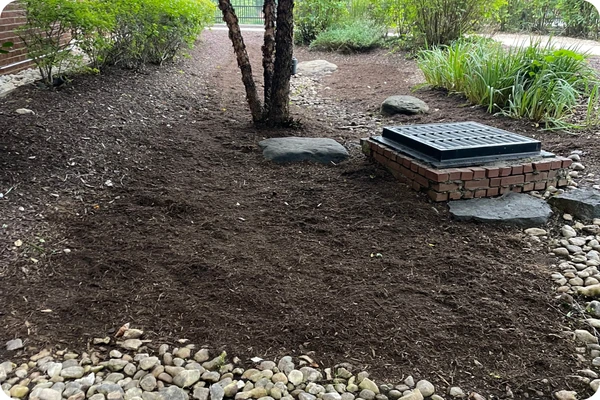
What Is Stormwater Infiltration?
Stormwater infiltration is the process of allowing runoff to soak into the ground rather than conveying all of it to a storm drain or surface water.
An infiltration practice typically captures runoff temporarily and allows that water to gradually enter the underlying soil. Depending on the design and site conditions, this can reduce the volume of runoff leaving a property, reduce peak discharge rates, and help promote groundwater recharge. Infiltration trenches, infiltration basins, porous pavement, and similar systems as examples of infiltration practices.
Common stormwater practices that may rely heavily on infiltration include:
- Infiltration trenches
- Infiltration basins
- Dry wells
- Permeable or porous pavement
- Certain bioretention and bioinfiltration facilities
For infiltration to work properly, however, water must be able to move through the soil beneath the facility. Soil characteristics, groundwater conditions, site design, construction, and sediment accumulation can all affect infiltration performance.
Where Does the Water Go?
This is one of the easiest ways to understand infiltration.
Instead of simply being collected and released through a pipe, the captured stormwater moves downward through the facility and into the surrounding soil.
For example, an infiltration trench may temporarily hold runoff within the void spaces of stone. That water then gradually infiltrates through the bottom and sides of the trench into the surrounding soil.
If that process becomes restricted, water may remain in the facility longer than intended or bypass the infiltration area through an overflow.
What Is Stormwater Filtration?
Filtration focuses primarily on treating stormwater as it passes through a filtering medium.
That medium might include sand, engineered soil, organic material, vegetation, or a manufactured filter depending on the type of system.
As runoff passes through the media, suspended material and other pollutants can be captured or treated before the water continues through the system. For example, sand filters are systems in which runoff passes through a sand bed before treated water is typically discharged through an underdrain.
Common stormwater practices that use filtration include:
- Sand filters
- Bioretention facilities
- Vegetated filter strips
- Some proprietary or manufactured treatment systems
- Certain tree box or planter systems
Unlike a dedicated infiltration system, a filtration system does not necessarily rely on the underlying native soil to accept all of the treated runoff.
A filtered system may instead collect water in an underdrain and discharge it back into the storm drainage network.
Infiltration vs. Filtration: The Key Difference
The easiest distinction is to ask what happens to the water after it enters the facility.
| Infiltration | Filtration | |
|---|---|---|
| Primary process | Water enters underlying or surrounding soil | Water passes through treatment media |
| Primary purpose | Manage runoff volume while providing treatment | Remove or reduce pollutants |
| Typical discharge | Into surrounding soil and potentially groundwater | Often through an underdrain or outlet |
| Examples | Infiltration trench, infiltration basin, permeable pavement | Sand filter, filtered bioretention |
| Common performance concern | Reduced infiltration or clogging | Clogged or ineffective filter media |
The distinction is important, but stormwater systems do not always fit neatly into one category.
Can a Stormwater Facility Use Both Infiltration and Filtration?
Yes. In fact, filtration and infiltration frequently occur within the same stormwater facility.
Bioretention is a good example.
Stormwater entering a bioretention facility may first pass through vegetation, mulch, and engineered soil. Those layers provide filtration and other treatment processes. Depending on how the facility is designed, some or all of the treated water may then infiltrate into the underlying soil.
Other bioretention facilities use an underdrain. In those systems, water filters through the treatment media but is then collected by the underdrain and conveyed elsewhere.
This is why two facilities that look almost identical at the surface may manage stormwater differently below ground.
Why Site Conditions Affect the Choice
Not every property is suitable for infiltration.
The ability to infiltrate stormwater depends on factors such as soil characteristics, groundwater conditions, available space, slopes, surrounding infrastructure, and other site-specific constraints. Infiltration practices therefore need to be properly sited and designed rather than simply installed wherever runoff collects.
Where infiltration is not appropriate or cannot provide the necessary performance, a filtration practice with an underdrain may provide treatment while allowing the treated runoff to be conveyed to another part of the stormwater system.
That difference also explains why understanding the original facility design is important when evaluating an existing stormwater BMP. Surface appearance alone does not always reveal whether a facility was designed for infiltration, filtration, or a combination of both.
Why Infiltration Systems Lose Performance
An infiltration facility depends on water being able to reach and move through its infiltration surface.
Sediment is one of the biggest threats to that process.
As fine particles accumulate, they can fill pore spaces within soil, stone, or other materials and reduce the rate at which water can infiltrate. Excess vegetation, debris, erosion, or upstream sediment sources may compound the problem.
Potential warning signs can include:
- Water remaining in the facility longer than expected
- Frequent use of an overflow
- Sediment deposits near the inlet or across the infiltration surface
- Erosion that carries soil into the facility
- Debris blocking flow paths
- Changes in the surface condition of permeable pavement
- Standing water where the facility previously drained
These symptoms do not automatically mean the infiltration system has failed. They do indicate that the facility may need further inspection to determine whether its hydraulic performance has changed.
Why Filtration Systems Lose Performance
Filtration facilities have a similar vulnerability: the filter media itself can become clogged.
When sediment and debris reach a sand bed, engineered soil layer, cartridge, or other filtering component faster than the system can accommodate them, flow through the media may gradually decline.
The result can be ponding, slower treatment, bypass conditions, or other performance problems depending on the facility’s design.
This is one reason pretreatment is so important in many stormwater systems. Pretreatment features intercept coarse sediment and debris before they reach more sensitive downstream components. Pretreatment can help prevent large particles from clogging filter material and infiltration areas.
A forebay, sedimentation area, vegetated strip, sump, or other pretreatment component may therefore protect both infiltration and filtration systems.
Maintenance Is Similar – But Not Identical
Both types of facilities need routine inspection and maintenance, but what technicians are trying to protect can differ.
For an infiltration facility, maintenance generally focuses on preserving the ability of water to enter the underlying soil. That means controlling sediment, keeping inflow areas functional, addressing erosion, and identifying conditions that could contribute to clogging.
For a filtration facility, maintenance focuses on maintaining flow through the treatment media and keeping inlets, outlets, underdrains, and pretreatment components functioning as designed.
In either case, simply removing visible vegetation or debris may not address an underlying performance problem.
If water is not moving through the facility correctly, the next question should be why.
The Importance of Knowing What Type of System You Have
For property owners and managers, infiltration and filtration facilities can sometimes be difficult to distinguish – especially when they are landscaped or located below ground.
Knowing the facility type helps answer important maintenance questions:
Should this facility drain into the ground or through a pipe?
Is standing water expected, or does it indicate a drainage problem?
Is there an underdrain that should be inspected?
Does the facility contain filter media that may eventually require rehabilitation or replacement?
Is there a pretreatment component that should be cleaned before sediment reaches the primary treatment area?
Plans, as-built drawings, inspection records, maintenance documentation, and a physical inspection can all help identify how a system was designed to function.
Don’t Assume “Not Draining” Means the Same Thing Everywhere
One of the most important practical differences between stormwater systems is that drainage problems have to be evaluated in the context of the facility’s design.
Slow drainage in an infiltration basin might point toward reduced infiltration capacity.
Similar ponding in a sand filter could indicate clogged filter media, an underdrain problem, or an obstructed outlet.
In a bioretention facility, the cause could involve the media, vegetation, underdrain, outlet, or underlying soil depending on the design.
Treating all of these situations as the same “drainage problem” can lead to the wrong maintenance approach.
Protecting Long-Term Stormwater Performance
Infiltration and filtration are both important stormwater treatment mechanisms, but they accomplish different things.
Infiltration manages stormwater by allowing it to enter the soil. Filtration treats stormwater by passing it through a medium designed to capture or remove pollutants. Many modern stormwater facilities combine both processes.
For property owners and managers, the terminology matters because the intended treatment process influences how a facility should drain, what components need attention, and what maintenance problems can affect long-term performance.
Routine inspections can help identify sediment accumulation, drainage changes, clogged components, erosion, vegetation issues, and other conditions before they interfere with the way the system was designed to operate.
If you’re unsure whether your stormwater facility relies on infiltration, filtration, or both, iSTORMWATER can inspect the system, identify maintenance concerns, and help determine the appropriate next steps for keeping it functional and compliant.
📞 Call us at (410) 231-3455 or 💬 Contact us online.



Real Results
iStormwater LLC was an excellent choice. They made the process of the Stormwater pond repairs seamless. They took charge of the project and got the project approved and passing the inspection. We highly recommend them and would use them again.
Incredible stormwater management service. The owner John consulted on a property I manage and ended up saving us thousands of dollars in environmental fees from the government. Now, our property is compliant with the EPA and we have a great partner to keep us maintained on stormwater regulations over time.
So helpful with all of my water issues.
Great communication and leadership and a family friendly atmosphere. Thank you John!
Buying a commercial property means evaluating much more than the building, parking lot, roof, utilities, and financials. The property's stormwater management system can carry its...
- Annapolis
- Anne Arundel County
- Baltimore County
- Baltimore
- Bel Air South
- Bethesda
- Bowie
- Cecil County
- Charles County
- Columbia
- Gaithersburg
- Glen Burnie
- Howard County
- Montgomery County
- Pasadena
- Prince George’s County
- Rockville
- Severna Park
- St. Mary’s County