

Stormwater Pipe Blockages: Causes Beyond Sediment
Stormwater pipe blockages are often blamed on sediment – and for good reason. Silt and debris buildup is a common issue. But focusing only on sediment can lead property managers and facility owners to overlook other critical causes that restrict flow, damage infrastructure, and create recurring drainage problems.
If your system isn’t performing as expected – even after cleaning – there’s a strong chance something else is at play.
This guide breaks down the less obvious, but equally important causes of stormwater pipe blockages, how to identify them, and what to do before they turn into costly repairs or compliance issues.
Why Looking Beyond Sediment Matters
Sediment buildup is typically visible during inspections and relatively straightforward to remove with routine maintenance like vacuum truck services. However, non-sediment blockages tend to be more persistent, harder to detect, and more damaging over time.
Ignoring these issues can lead to:
- Repeated backups and localized flooding
- Premature pipe deterioration or failure
- Reduced system capacity during storm events
- Regulatory compliance risks
Understanding the full picture helps shift maintenance from reactive to proactive.
1. Root Intrusion from Nearby Vegetation
Tree and shrub roots are one of the most underestimated causes of pipe blockages – especially in older systems or areas with mature landscaping.
How it happens:
Roots naturally seek out moisture. Even small cracks or loose joints in stormwater pipes can attract roots, which then expand inside the pipe and trap debris.
What to look for:
- Recurring clogs in the same location
- Slow drainage despite recent cleaning
- Cracks or joint separation in pipe inspections
Why it matters:
Root intrusion doesn’t just block flow – it can compromise structural integrity, leading to pipe collapse if left untreated.
2. Pipe Misalignment or Structural Failure
Stormwater pipes aren’t immune to shifting soils, traffic loads, or age-related wear. Over time, pipes can become misaligned or partially collapsed.
Common causes:
- Soil settlement or erosion beneath the pipe
- Heavy vehicle loads above shallow infrastructure
- Poor installation or outdated materials
Signs of trouble:
- Water pooling upstream of a specific pipe segment
- Sudden drops in drainage performance
- Visible offsets or deformation during camera inspections
The takeaway:
Even a slight misalignment can create a “lip” inside the pipe that catches debris and accelerates blockage formation.
3. Grease, Oils, and Urban Runoff Pollutants
In commercial and mixed-use properties, stormwater systems often collect more than just rainwater.
Common contributors:
- Parking lot runoff (oil, fuel residues)
- Dumpster areas and loading zones
- Outdoor washing or improper disposal practices
What happens inside the pipe:
Oils and grease can adhere to pipe walls, trapping sediment and debris over time. This creates a sticky buildup that standard flushing may not fully remove.
Why it’s often missed:
Unlike sediment, these materials aren’t always visible during surface-level inspections – but they significantly reduce pipe capacity.
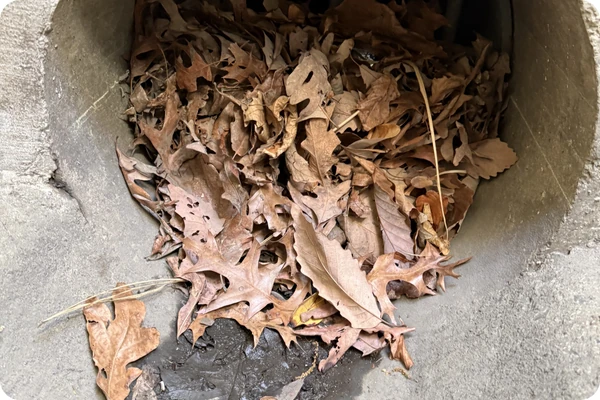
4. Trash, Organic Debris, and Illicit Dumping
Stormwater systems are not designed to handle trash – but they often end up doing exactly that.
Typical materials found:
- Plastic bags, bottles, and packaging
- Leaves, mulch, and grass clippings
- Construction debris
Key issue:
These materials can accumulate at bends, junctions, or pipe transitions, forming blockages that worsen over time.
A bigger concern:
Illicit dumping (intentional or accidental) can introduce large or hazardous materials into the system, leading to severe obstructions and potential environmental violations.
5. Invasive Animal Activity
It’s not uncommon for small animals to enter stormwater systems.
Examples include:
- Rodents nesting inside pipes
- Beavers or other wildlife blocking outfalls
- Insects contributing to organic buildup
Impact:
Nesting materials and organic matter can restrict flow and create unexpected blockages in otherwise clean systems.
6. Mineral Scaling and Hard Water Deposits
In certain regions, stormwater pipes can develop mineral buildup over time.
How it forms:
Water carrying dissolved minerals (like calcium or magnesium) can leave deposits along pipe walls, gradually narrowing the flow path.
Why it’s problematic:
- Reduces pipe diameter without obvious debris
- Hardens over time, making removal more difficult
- Often mistaken for structural pipe issues
7. Poor System Design or Legacy Infrastructure
Sometimes the issue isn’t maintenance – it’s the system itself.
Design-related causes:
- Undersized pipes for current runoff volumes
- Sharp angles or inefficient layouts
- Lack of pretreatment components (like forebays or catch basins)
Legacy challenges:
Older systems may not meet current standards, leading to chronic blockage issues even with regular maintenance.
How to Accurately Diagnose Non-Sediment Blockages
Because these issues aren’t always visible, proper diagnosis is key.
Effective inspection methods:
- CCTV pipe inspections to identify roots, misalignment, or internal buildup
- Routine system mapping and flow tracking
- Targeted maintenance records to identify recurring problem areas
Without this level of insight, many non-sediment issues go unresolved.
Preventative Strategies That Go Beyond Cleaning
If your maintenance plan focuses only on sediment removal, it’s incomplete.
A more comprehensive approach includes:
- Scheduled pipe inspections, not just basin cleanouts
- Vegetation management near critical infrastructure
- Monitoring high-risk areas like loading zones and outfalls
- Addressing minor structural issues before they escalate
- Educating tenants or site users on proper disposal practices
The Bottom Line
Sediment is only part of the story.
Stormwater pipe blockages are often caused – or worsened – by roots, structural failures, pollutants, debris, and system design limitations. Identifying and addressing these factors early can prevent repeat issues, extend the life of your infrastructure, and keep your property in compliance.
If your system keeps clogging despite regular cleaning, it’s time to look deeper. A comprehensive inspection can uncover the real cause – and help you fix it before it turns into a bigger problem.
📞 Call us at (410) 231-3455 or 💬 Contact us online.



Real Results
iStormwater LLC was an excellent choice. They made the process of the Stormwater pond repairs seamless. They took charge of the project and got the project approved and passing the inspection. We highly recommend them and would use them again.
Incredible stormwater management service. The owner John consulted on a property I manage and ended up saving us thousands of dollars in environmental fees from the government. Now, our property is compliant with the EPA and we have a great partner to keep us maintained on stormwater regulations over time.
So helpful with all of my water issues.
Great communication and leadership and a family friendly atmosphere. Thank you John!
Buying a commercial property means evaluating much more than the building, parking lot, roof, utilities, and financials. The property's stormwater management system can carry its...
- Annapolis
- Anne Arundel County
- Baltimore County
- Baltimore
- Bel Air South
- Bethesda
- Bowie
- Cecil County
- Charles County
- Columbia
- Gaithersburg
- Glen Burnie
- Howard County
- Montgomery County
- Pasadena
- Prince George’s County
- Rockville
- Severna Park
- St. Mary’s County