

Stormwater Vaults: Maintenance & Inspection Essentials
Stormwater vaults are an effective way to manage runoff when surface space is limited – but because they’re underground, they’re often forgotten until a problem arises. Regular inspections and maintenance are essential to keep these systems functioning properly and in compliance with local stormwater regulations.
This guide covers the basics of stormwater vault maintenance, key components to inspect, and best practices to help property owners and managers protect their investment.
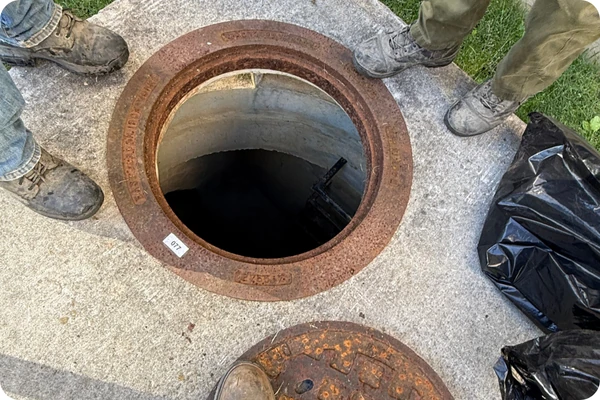
What Is a Stormwater Vault?
A stormwater vault, sometimes called an underground detention system, is a large subsurface structure designed to temporarily hold stormwater runoff and release it slowly into the drainage system.
Vaults are commonly installed beneath parking lots, courtyards, and landscaped areas in commercial, municipal, and institutional properties. Because they’re out of sight, vaults require specialized maintenance and inspection procedures to ensure long-term performance.
Why Vault Maintenance & Inspection Matter
Even though a stormwater vault isn’t visible, it plays a critical role in controlling runoff and protecting water quality.
Here’s why routine inspection and maintenance are so important:
- Prevent flooding and failures: Sediment buildup and blocked outlets reduce storage and flow capacity, leading to backups or localized flooding.
- Protect water quality: When sediment and debris accumulate, pollutants like oil and heavy metals can bypass treatment.
- Stay compliant: Most jurisdictions require proof of stormwater system inspections under MS4 or other stormwater permits.
- Extend lifespan: Regular maintenance helps prevent structural deterioration, saving thousands in potential repair or replacement costs.
Key Components to Inspect
During an inspection, it’s important to review every element of the vault system.
- Access Risers and Manhole Covers
Check that all lids are secure, watertight, and clearly labeled for stormwater access. Ensure risers are clear of parked vehicles or landscaping that might block entry. - Inlet and Outlet Pipes
Look for sediment, debris, or damage that could block flow. Any obstructions should be cleared immediately. - Sediment Storage Sump or Pretreatment Chamber
Sediment tends to settle in these chambers. If buildup reaches 10–25% of total depth, it’s time for a cleanout. - Overflow or Emergency Spillway
Confirm that the overflow path is clear. Blocked spillways can cause pressure buildup or flooding. - Structural Integrity
Inspect the vault walls and floor for cracks, leaks, or joint separation. Structural damage should be assessed by an engineer. - Treatment Media or Filter Cartridges (if applicable)
If your vault includes treatment components like filter cartridges or sand media, check for clogging and bypass flow. Replace or clean as needed. - Safety Features
Ensure confined space protocols are followed and access points are properly marked to prevent unauthorized entry.
Recommended Inspection & Maintenance Schedule
| Frequency | Task |
|---|---|
| Quarterly | Visual inspection of inlets, outlets, covers, and debris removal. |
| Annually | Full inspection including sediment depth, structure check, and recordkeeping. |
| After major storms | Inspect for clogging, sediment displacement, or damage. |
| Every 3–5 years | Perform deep cleaning, sediment removal, and comprehensive condition assessment. |
Best Practices for Vault Maintenance
-
Keep a detailed checklist: Document every inspection and maintenance activity, including date, findings, and photos.
-
Hire qualified professionals: Cleaning and confined space entry require specialized training and equipment.
-
Maintain upstream devices: Keep catch basins, forebays, and oil-grit separators clear to prevent premature vault clogging.
-
Budget for maintenance: Include vault cleaning and inspection in your annual stormwater maintenance plan.
-
Prioritize safety: Never enter a vault without proper confined space procedures in place.
Common Vault Problems & Solutions
| Problem | What to Look For | Recommended Action |
|---|---|---|
| Sediment buildup | Slow drainage, reduced storage | Schedule a vacuum cleaning and check pretreatment devices. |
| Blocked inlets/outlets | Pooling or backflow | Remove debris, inspect pipe alignment, and repair as needed. |
| Media clogging | Reduced treatment flow | Replace media or cartridges per manufacturer recommendations. |
| Structural cracks or leaks | Visible damage or seepage | Have an engineer assess and repair structural components. |
| Access blockage | Obstructed or damaged lids | Clear area and repair or replace lids. |
Regional Considerations for the Mid-Atlantic
In Maryland, Northern Virginia, Delaware, and Washington, DC, vault maintenance is especially important due to:
-
Seasonal temperature swings: Freeze-thaw cycles can cause joint or lid damage.
-
High sediment loads: Urban parking lots and construction areas contribute more debris and pollutants.
-
Regulatory oversight: Many municipalities require annual stormwater maintenance records for MS4 compliance.
-
Chesapeake Bay cleanup goals: Proper vault maintenance helps reduce pollutant loads that affect the Bay’s water quality.
Partner With iSTORMWATER for Vault Maintenance
iSTORMWATER provides comprehensive inspection and maintenance services for stormwater vaults across the Mid-Atlantic. Our confined space entry certified team can:
-
Inspect vaults for sediment, structural, and flow issues
-
Perform cleaning and sediment removal
-
Repair or rehabilitate damaged components
-
Maintain compliance documentation for MS4 or municipal audits
-
Develop customized inspection schedules and budgets
Regular vault maintenance protects your property, preserves system performance, and ensures full compliance with local and state stormwater regulations.
Contact iSTORMWATER today to schedule an inspection or learn more about our stormwater vault maintenance services.
📞 Call us at (410) 231-3455 or 💬 Contact us online.



Real Results
iStormwater LLC was an excellent choice. They made the process of the Stormwater pond repairs seamless. They took charge of the project and got the project approved and passing the inspection. We highly recommend them and would use them again.
Incredible stormwater management service. The owner John consulted on a property I manage and ended up saving us thousands of dollars in environmental fees from the government. Now, our property is compliant with the EPA and we have a great partner to keep us maintained on stormwater regulations over time.
So helpful with all of my water issues.
Great communication and leadership and a family friendly atmosphere. Thank you John!
Buying a commercial property means evaluating much more than the building, parking lot, roof, utilities, and financials. The property's stormwater management system can carry its...
- Annapolis
- Anne Arundel County
- Baltimore County
- Baltimore
- Bel Air South
- Bethesda
- Bowie
- Cecil County
- Charles County
- Columbia
- Gaithersburg
- Glen Burnie
- Howard County
- Montgomery County
- Pasadena
- Prince George’s County
- Rockville
- Severna Park
- St. Mary’s County