

What Happens to Stormwater Infrastructure in a Drought?
It’s easy to assume that less rainfall means fewer stormwater concerns. But in reality, drought conditions can quietly degrade stormwater system performance, setting the stage for bigger failures when rain eventually returns.
Across Maryland, Northern Virginia, Washington, DC, and Delaware, extended dry periods are becoming more common. These shifts don’t just affect water supply – they directly impact how stormwater infrastructure functions, ages, and complies with regulations.
For property managers, HOAs, and commercial site owners, drought introduces a different kind of risk: systems that appear fine – until they suddenly aren’t.
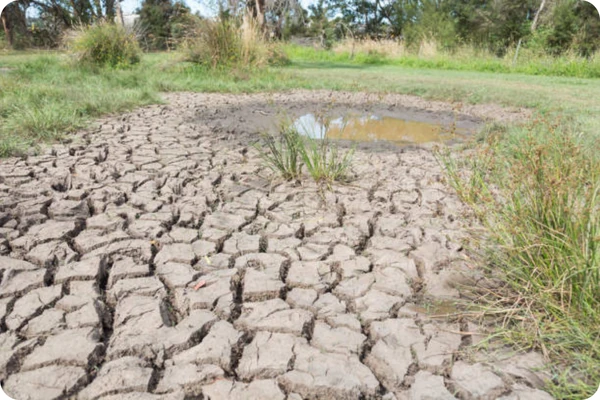
What Happens to Stormwater Systems During a Drought?
Stormwater systems are designed around intermittent rainfall and consistent flow patterns. When those patterns disappear, several issues begin to develop beneath the surface.
1. Sediment Hardening and Compaction
Without regular storm events to mobilize and redistribute sediment:
- Fine particles settle and compact in forebays, pipes, and structures
- Sediment becomes densely packed and harder to remove
- Vacuuming and cleaning become less effective over time
This is especially common in detention and bioretention systems throughout the Mid-Atlantic, where clay-heavy soils can accelerate compaction.
2. Vegetation Stress and Die-Off
Stormwater BMPs rely heavily on vegetation for filtration and stabilization. During drought:
- Plants experience water stress, thinning, or complete die-off
- Root systems weaken, reducing soil stability
- Bare areas become vulnerable to erosion when rain returns
In bioretention facilities and swales, this can significantly reduce pollutant removal efficiency and lead to compliance concerns.
3. Reduced Infiltration Capacity
Dry soils don’t always absorb water better – in fact, the opposite can occur:
- Soil can become hydrophobic (repelling water) after extended dryness
- Crusting forms on the surface, limiting infiltration
- Initial storm events produce more runoff than expected
This can overwhelm systems that would otherwise function properly under normal conditions.
4. Structural Deterioration Goes Unnoticed
With little to no flow:
- Minor issues like cracks, joint separation, or pipe invert wear remain hidden
- Debris accumulates in inlets and conveyance systems
- Early-stage failures progress without visible warning signs
By the time rainfall returns, these small issues can quickly escalate into blockages or system failure.
5. First Flush Pollution Spikes
After a drought, the first significant rainfall event often carries:
- Built-up sediment
- Oils and hydrocarbons from paved surfaces
- Organic debris and trash
This “first flush” can overwhelm treatment systems like filters, forebays, and proprietary BMPs, reducing effectiveness and increasing maintenance needs.
Why This Matters in MD, Northern VA, DC, and Delaware
The Mid-Atlantic region presents a unique combination of challenges:
- Highly variable weather patterns (wet seasons followed by extended dry spells)
- Regulated stormwater programs requiring consistent system performance
- Dense commercial and residential development, increasing runoff potential
Local jurisdictions don’t relax compliance expectations during drought. Systems are still expected to function properly when rainfall occurs – regardless of how long it’s been dry.
Common Post-Drought Problems
After extended dry periods, inspections across the region frequently reveal:
- Compacted sediment in forebays and ponds
- Dead or stressed vegetation in bioretention areas
- Blocked or partially obstructed inflow structures
- Reduced filtration performance in manufactured systems
- Unexpected erosion after the first major storm
These issues often require more intensive maintenance than if they had been addressed proactively during the drought.
How to Maintain Stormwater Systems During a Drought
Drought conditions call for a different maintenance mindset – not less maintenance, but smarter, more targeted efforts.
Prioritize Inspections (Even Without Rainfall)
Dry weather is actually an ideal time to:
- Inspect structural components
- Identify sediment buildup and compaction
- Evaluate vegetation health
Catching issues early prevents costly repairs later.
Address Vegetation Proactively
Maintain BMP vegetation by:
- Replacing dead or failing plants
- Managing invasive species that thrive in stressed conditions
- Stabilizing bare soil areas before erosion occurs
Healthy vegetation is critical for system recovery when rainfall returns.
Plan for Sediment Removal Strategically
Compacted sediment may require:
- More aggressive removal methods
- Specialized equipment or repeat maintenance visits
Waiting until after a storm event can make removal more difficult and disruptive.
Prepare for the First Major Storm
Before rainfall returns:
- Clear inlets, pipes, and conveyance paths
- Ensure treatment systems are functioning properly
- Remove accumulated debris and pollutants
This reduces the impact of first flush events and protects downstream infrastructure.
The Bottom Line
Drought doesn’t pause stormwater risk – it changes how that risk develops.
Systems that go unchecked during dry periods are far more likely to experience:
- Performance issues
- Compliance violations
- Costly repairs
In regions like Maryland, Northern Virginia, DC, and Delaware, where weather patterns are increasingly unpredictable, proactive maintenance during drought conditions is essential to long-term system performance.
Need Help Preparing Your System for Changing Conditions?
Whether your property has experienced extended dry weather or you’re preparing for the next storm cycle, proactive maintenance can make all the difference.
A targeted inspection and maintenance plan can help identify hidden risks, restore system performance, and keep your site in compliance – before small issues turn into major problems.
📞 Call us at (410) 231-3455 or 💬 Contact us online.



Real Results
iStormwater LLC was an excellent choice. They made the process of the Stormwater pond repairs seamless. They took charge of the project and got the project approved and passing the inspection. We highly recommend them and would use them again.
Incredible stormwater management service. The owner John consulted on a property I manage and ended up saving us thousands of dollars in environmental fees from the government. Now, our property is compliant with the EPA and we have a great partner to keep us maintained on stormwater regulations over time.
So helpful with all of my water issues.
Great communication and leadership and a family friendly atmosphere. Thank you John!
Stormwater systems require ongoing maintenance to function properly, meet regulatory requirements, and protect downstream waterways. However, many commercial property owners and managers still rely on...
- Annapolis
- Anne Arundel County
- Baltimore County
- Baltimore
- Bel Air South
- Bethesda
- Bowie
- Cecil County
- Charles County
- Columbia
- Gaithersburg
- Glen Burnie
- Howard County
- Montgomery County
- Pasadena
- Prince George’s County
- Rockville
- Severna Park
- St. Mary’s County